
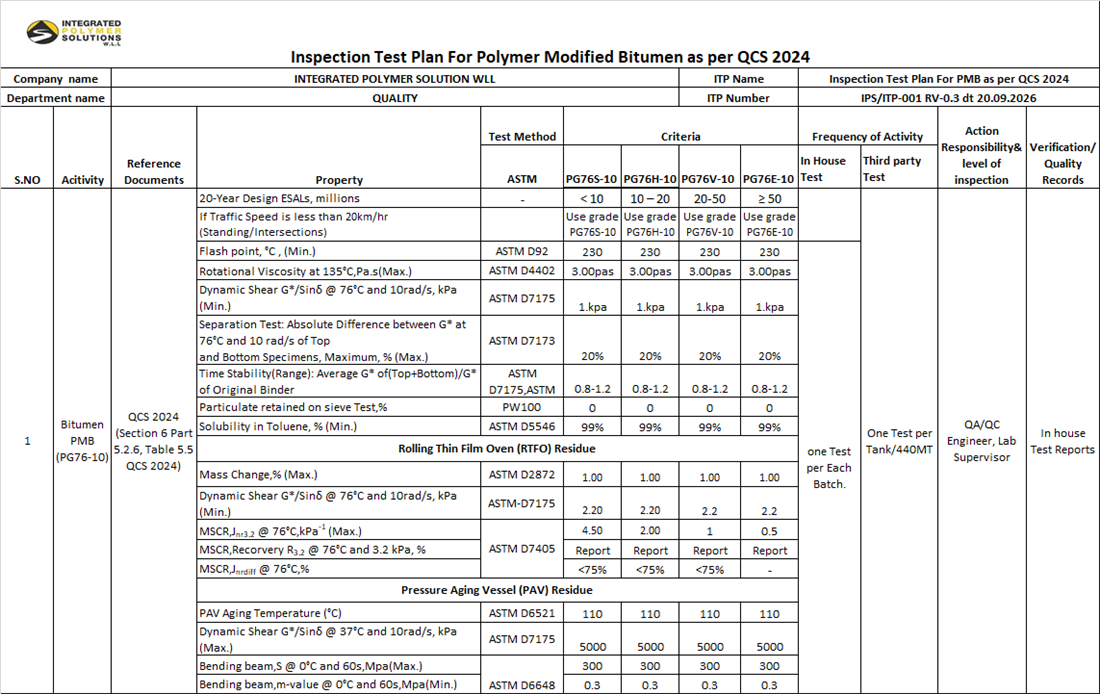
Our on-site QC laboratory ensures full traceability and compliance through daily RTFOT/MSCR testing (within 4-5 hours) and full DSR/BBR testing regimes for every 440 tons produced.
Our QMS has been developed in compliance with the ISO 9001:2015 standard and adopts a process approach to enhancing customer satisfaction by meeting customer requirements. The system ensures that quality concerns, environmental aspects, and occupational health and safety hazards are identified and associated risks evaluated, leading to an appropriate set of controls and objectives.
Management of processes is achieved using the Plan-Do-Check-Act (PDCA) cycle with an overall focus on risk-based thinking to take advantage of opportunities and prevent undesirable results. The QA/QC framework covers the entire production lifecycle — from testing constituent raw materials to monitoring post-production storage, shipping, and handling.
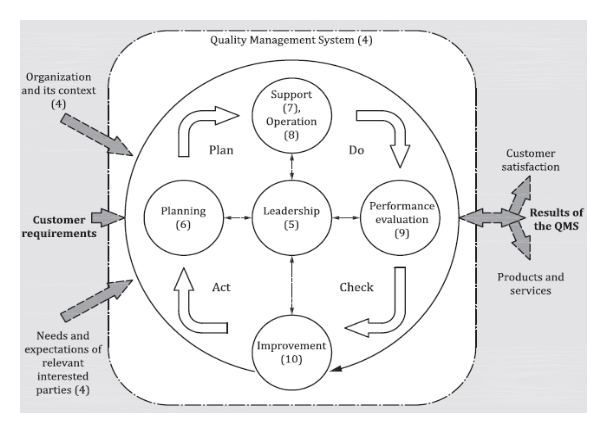
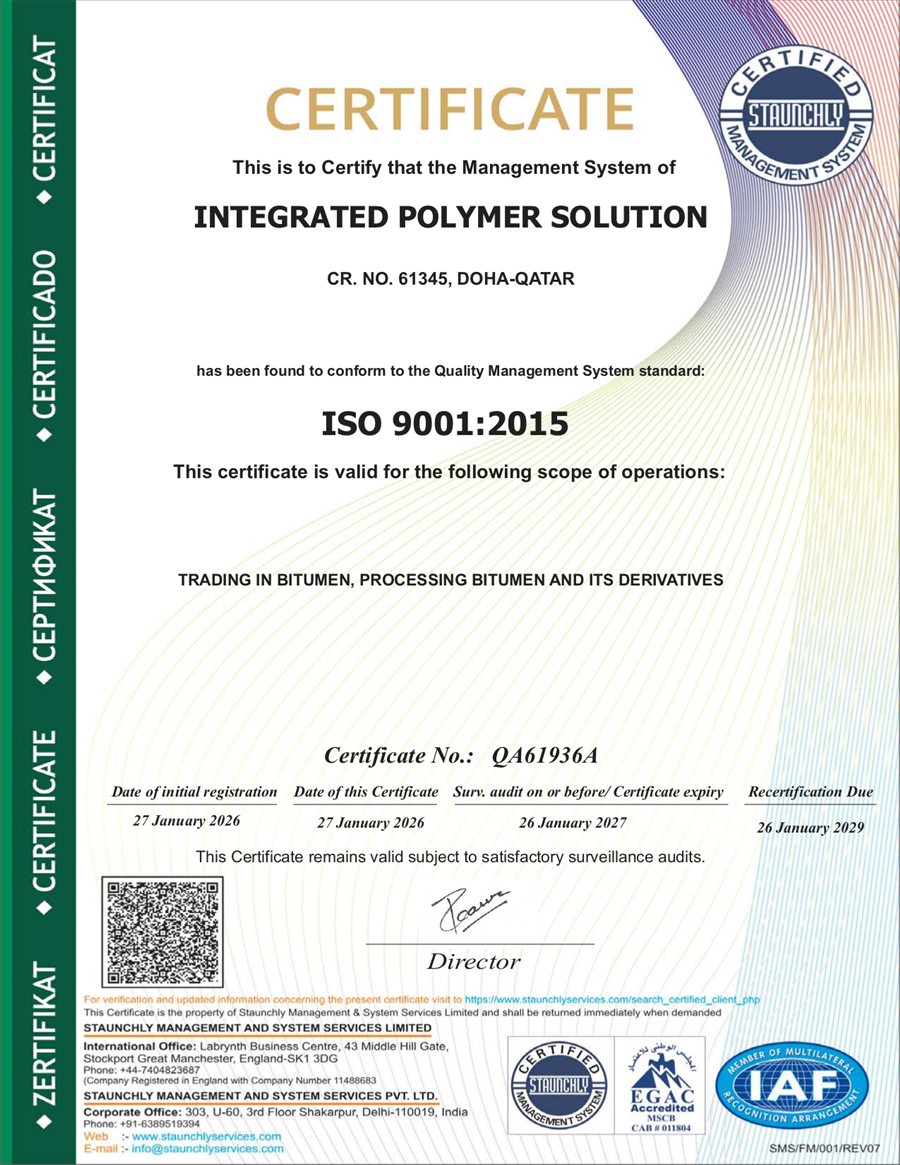
Quality Management System
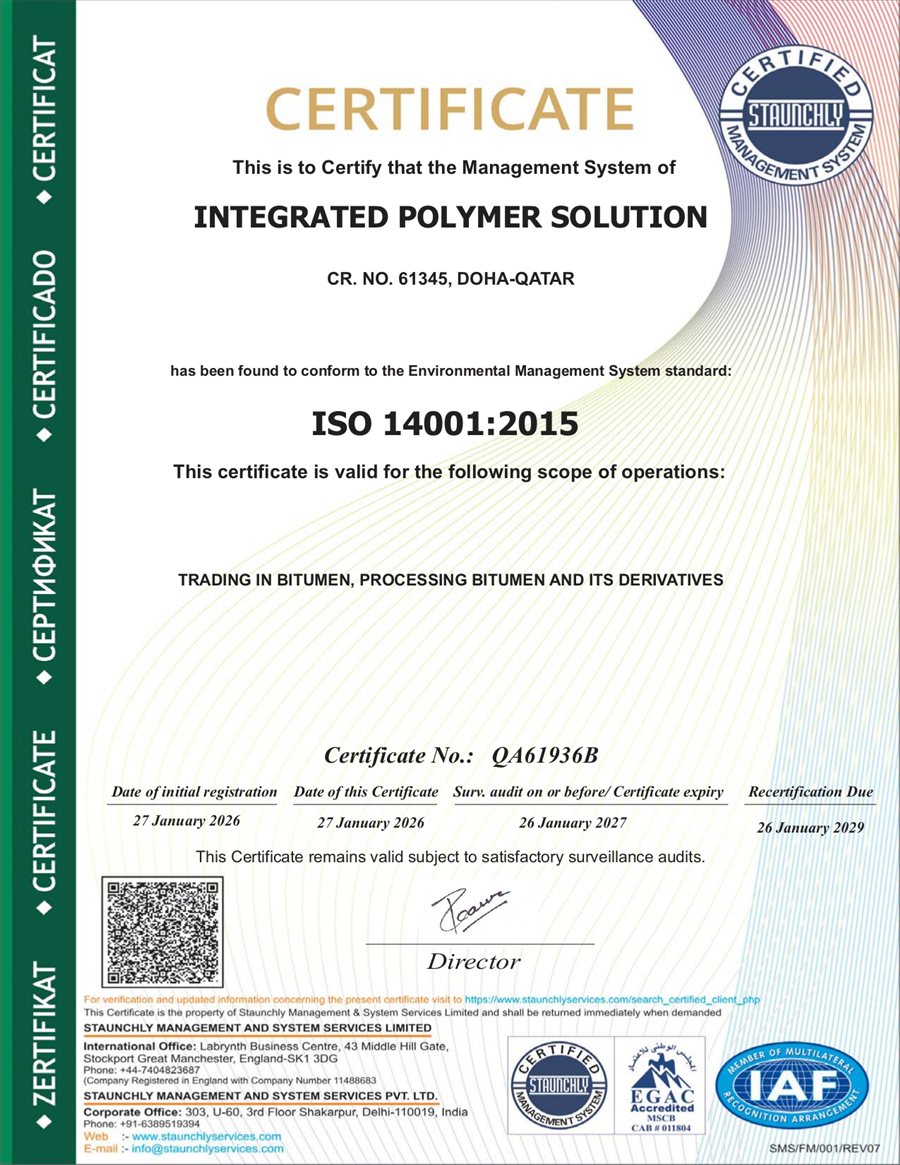
Environmental Management System
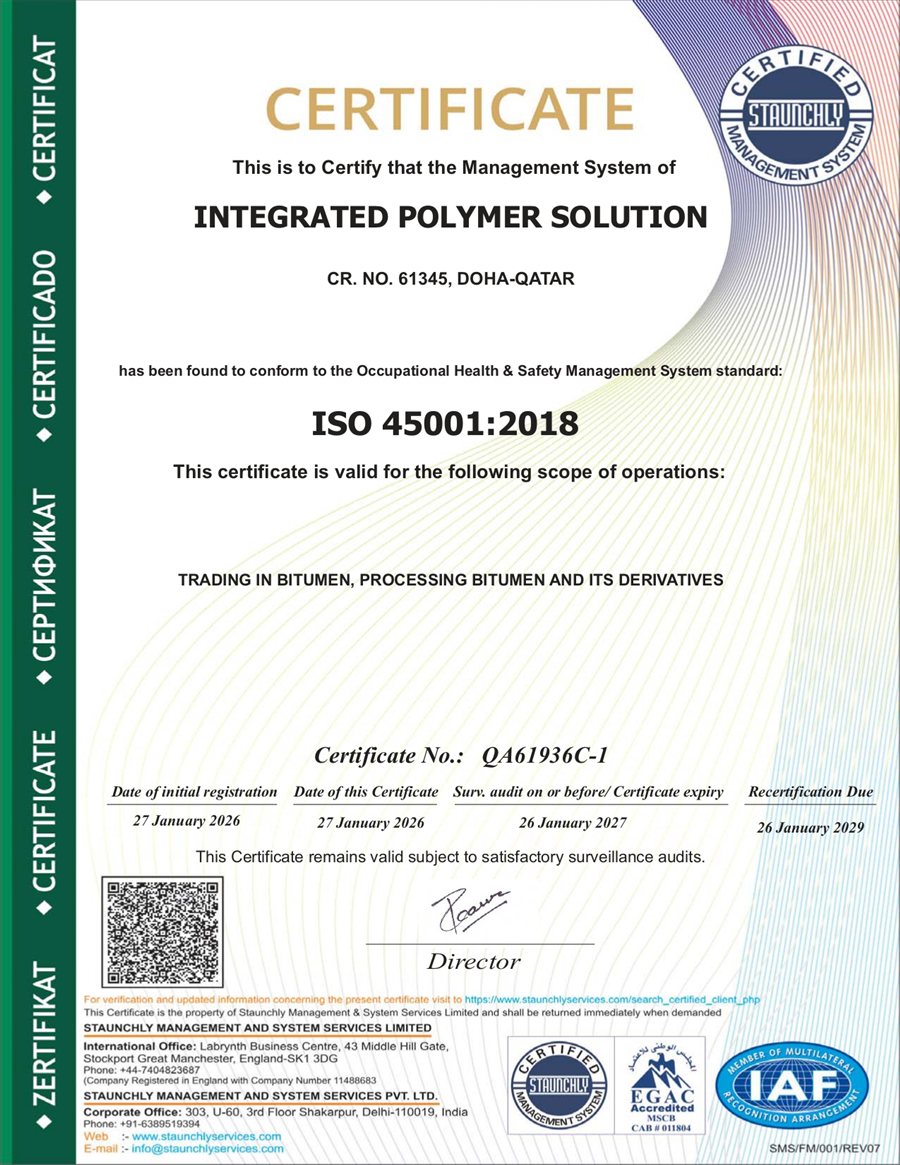
Occupational H&S Management System
| Test | AASHTO | ASTM |
|---|---|---|
| Rotational Viscometer | T316 | D4402 |
| Penetration | T49 | D5 |
| Softening Point | T53 | D36 |
| Sampling Procedure | T40 | D140 |
A full testing regime for PMB takes 3–4 days, by which time HMA is already produced. However, testing up to RTFOT and MSCR can be done on a daily basis (within 4–5 hours), providing sufficient information for QC release of PMB for shipment. Remaining full PG tests (DSR on PAV residue and BBR) are performed at lesser frequency — every 440 tons — to ensure consistency of the produced PMB.
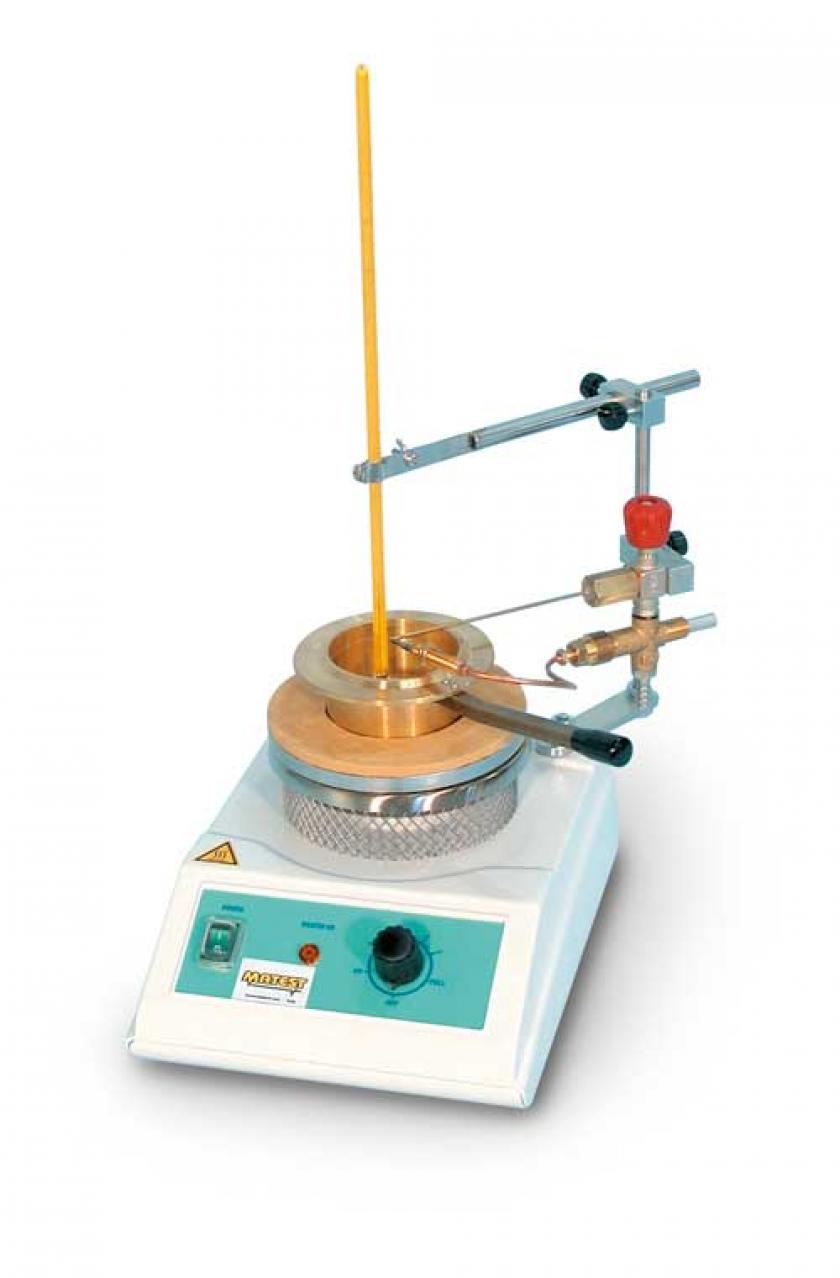
Cleveland Open Cup apparatus (ASTM D92)
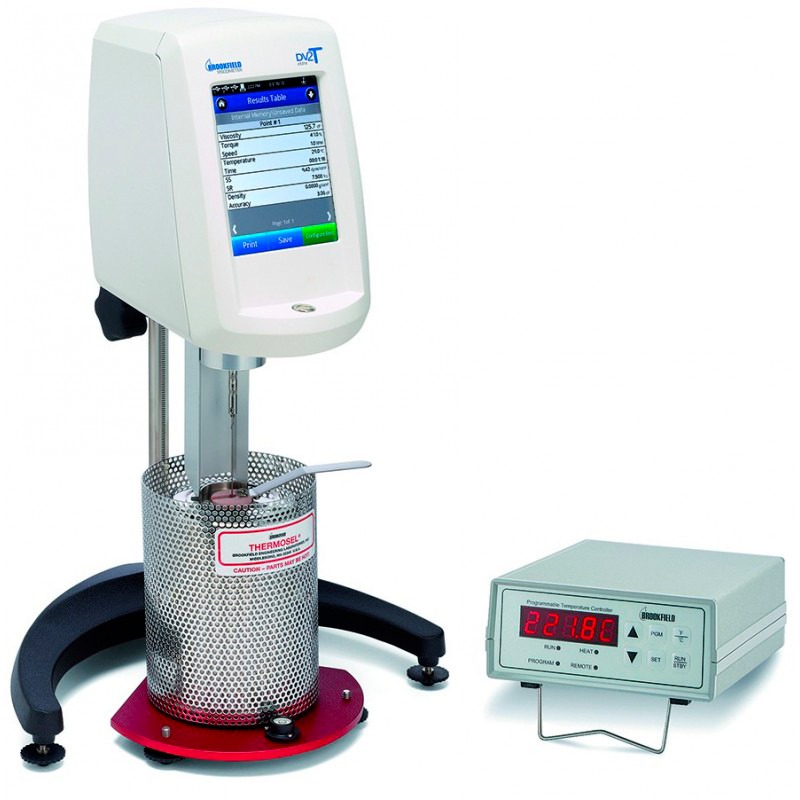
Brookfield Rotational Viscometer (ASTM D4402)
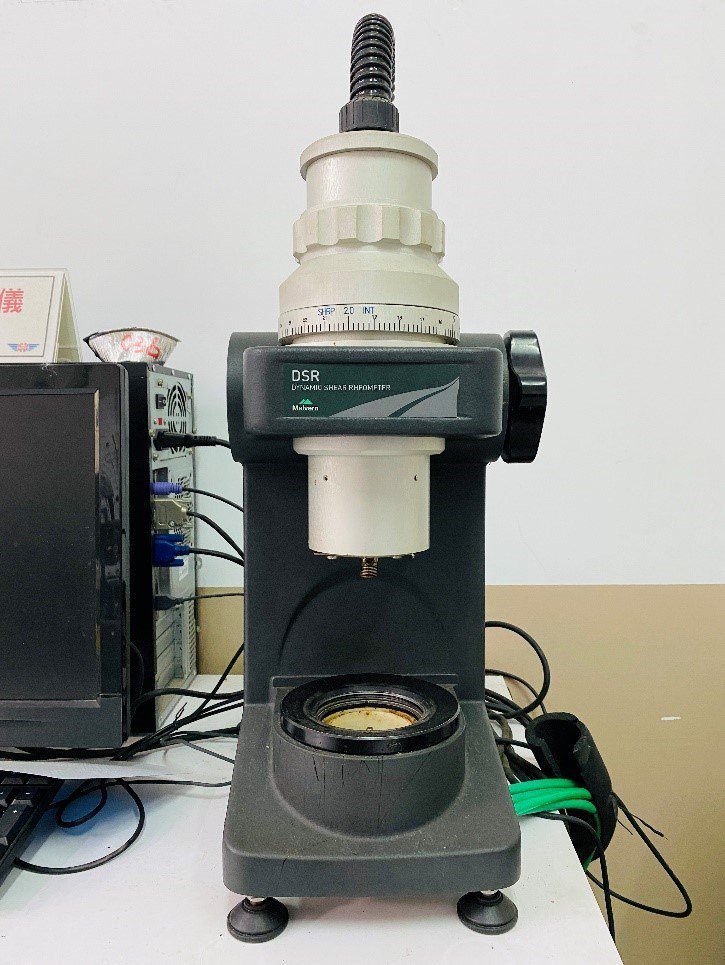
DSR high-temperature performance grading (ASTM D7175)
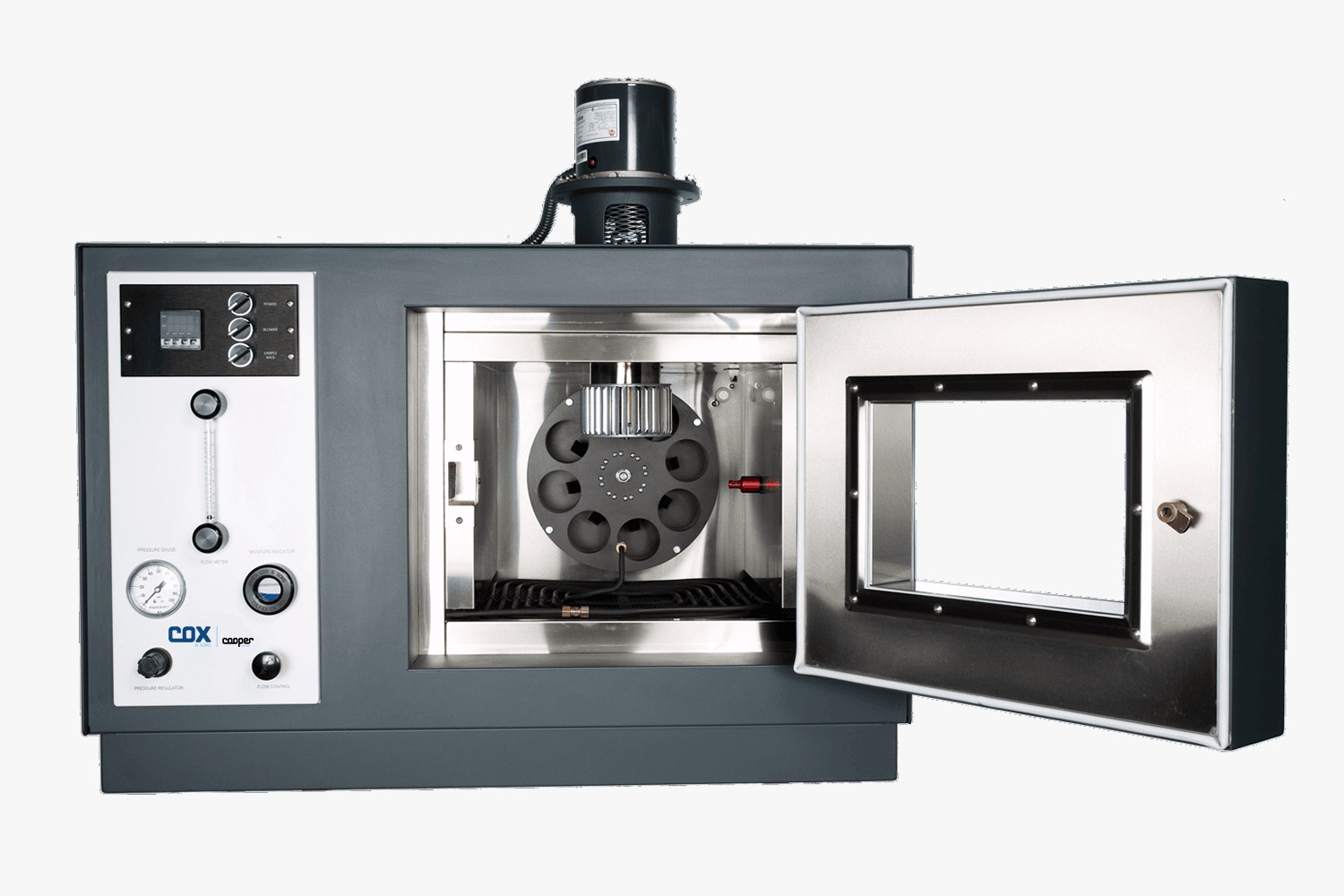
Short-term aging simulation (ASTM D2872)
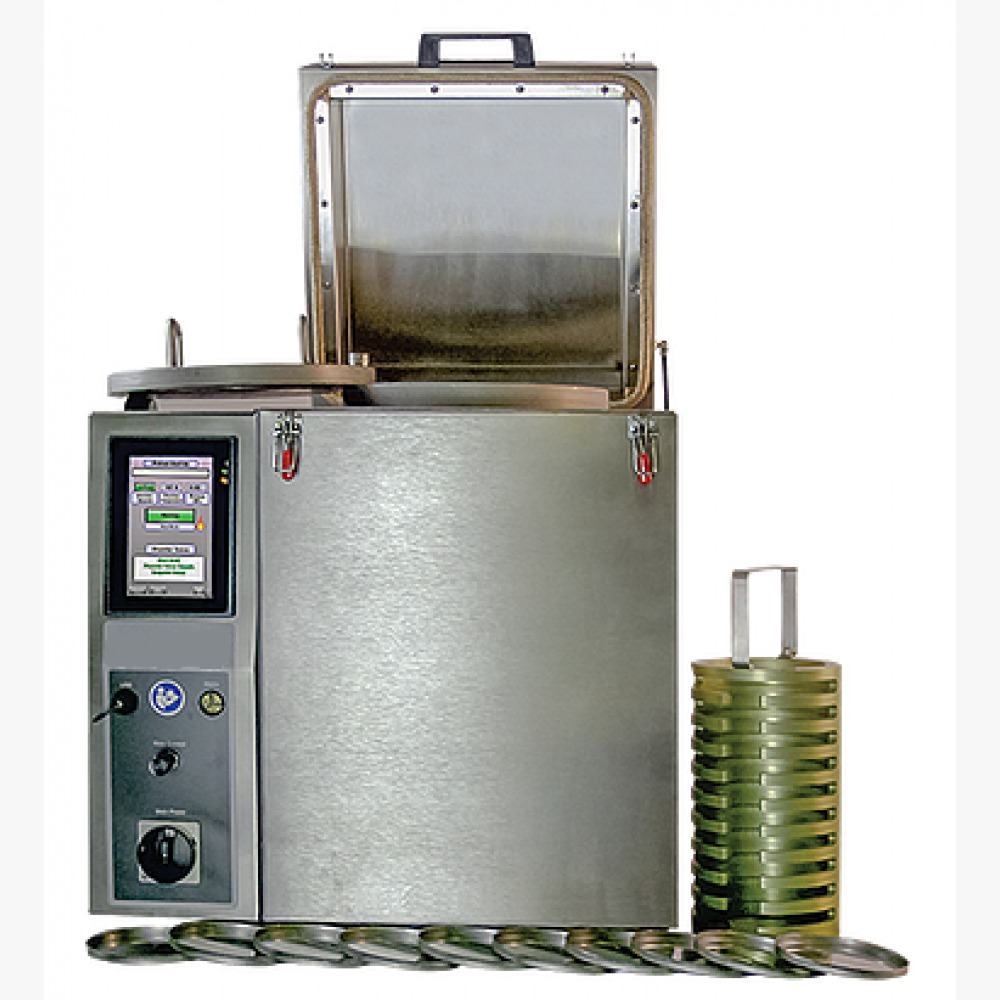
Long-term aging simulation (ASTM D6521)
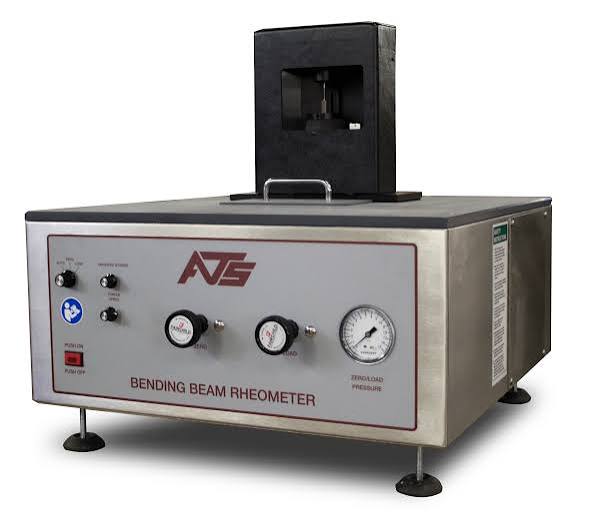
Low-temperature stiffness & cracking (ASTM D6648)
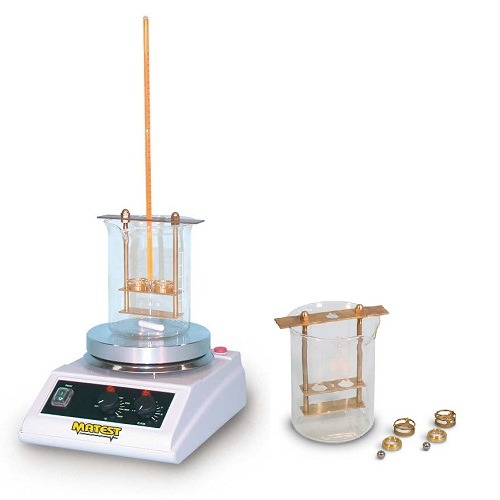
Ring & Ball apparatus (ASTM D36)
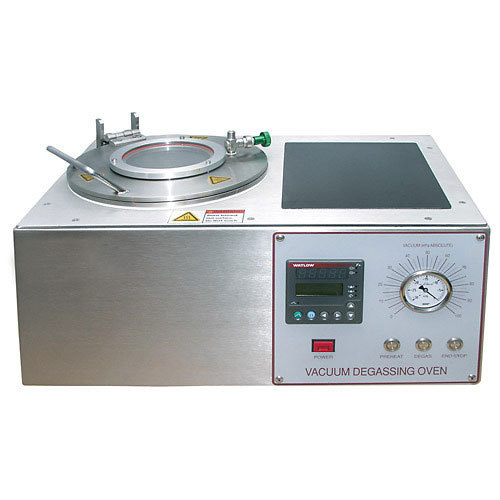
Sample preparation & bubble removal
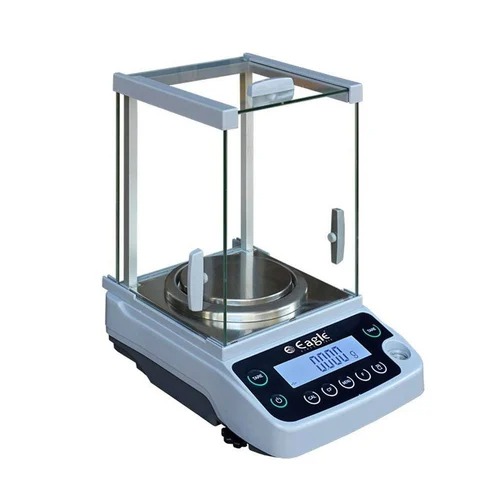
Precision weighing of binder and modifier components
Per AASHTO T 40, ASTM D 140, and ASTM D 3665 standards, manufactured and field PGAB/PMB samples are randomly drawn per lot using minimum 1-liter portions in duplicate. Before collecting the test sample, at least 4 liters of asphalt binder are flushed from the lines and wasted, while the practice of “dipping” directly from tanks is strictly avoided.
All samples are properly labeled on the containers (not the lids), leaving adequate free space at the top to prevent spills during stirring. Whenever third-party, Agency, or Client quality assurance samples are drawn, IPS qualified personnel retain an equivalent split sample for QC resolution in the event of variable or nonconforming test results.
Samples are stored in the internal QC laboratory's dedicated “sample storage room” to protect them from environmental damage for a duration specified by project guidelines or client agreements. Safe handling dictates that friction lids remain loosely fitted during cooling and reheating to relieve pressure; reheating is limited to a single occurrence using minimal heat for the shortest time possible.
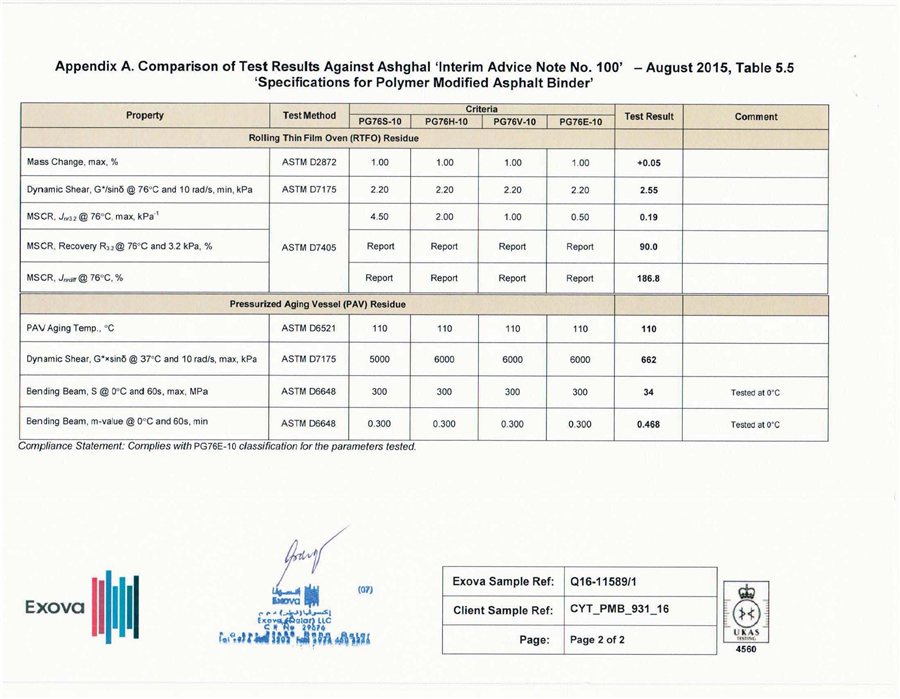
Independent verification by Ashghal-approved laboratories, including plant and laboratory calibration certificates.
Validated calibration certificates for plant instrumentation and laboratory equipment.
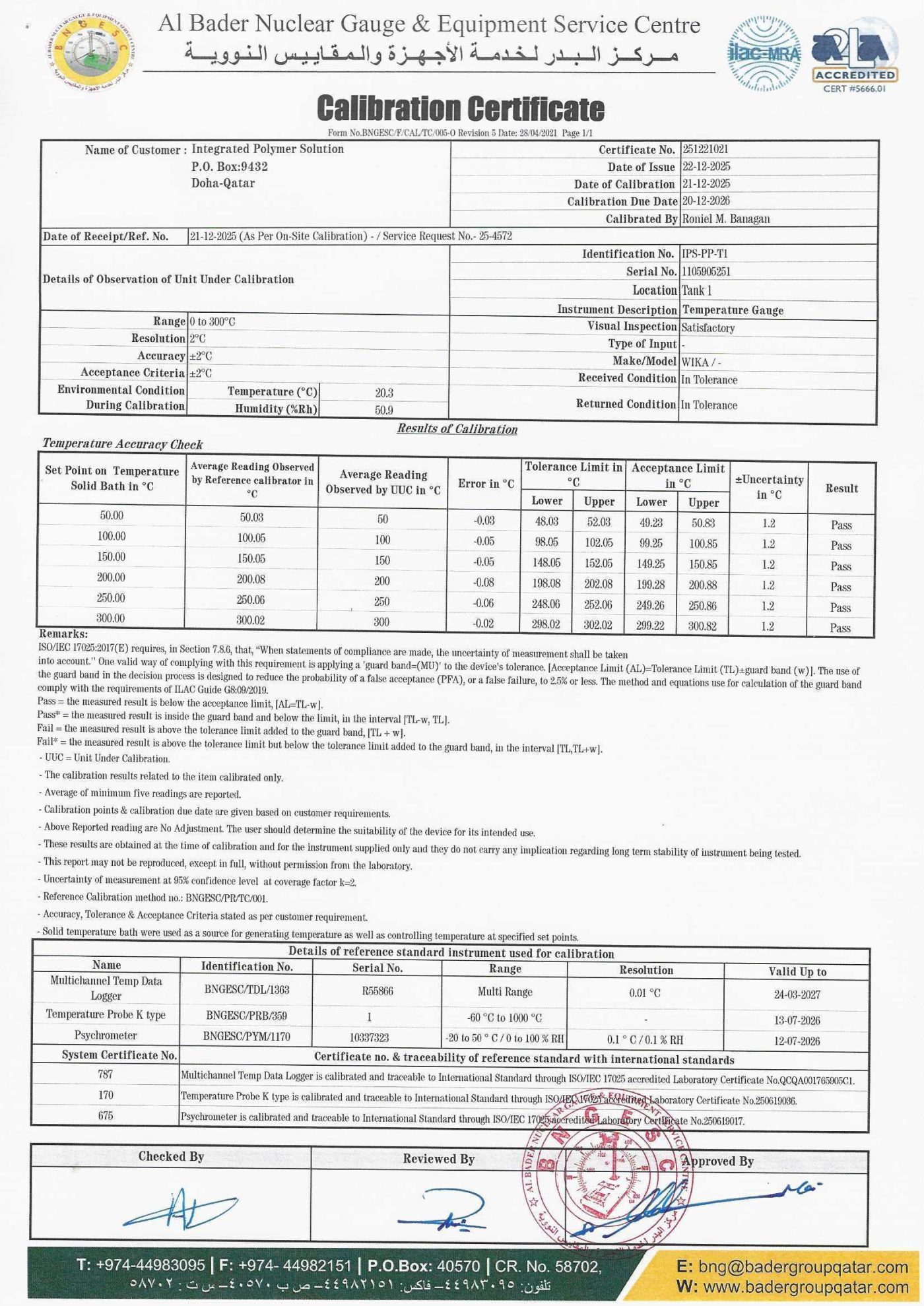 Temperature Gauge – Tank 1 (IPS-PP-T1)
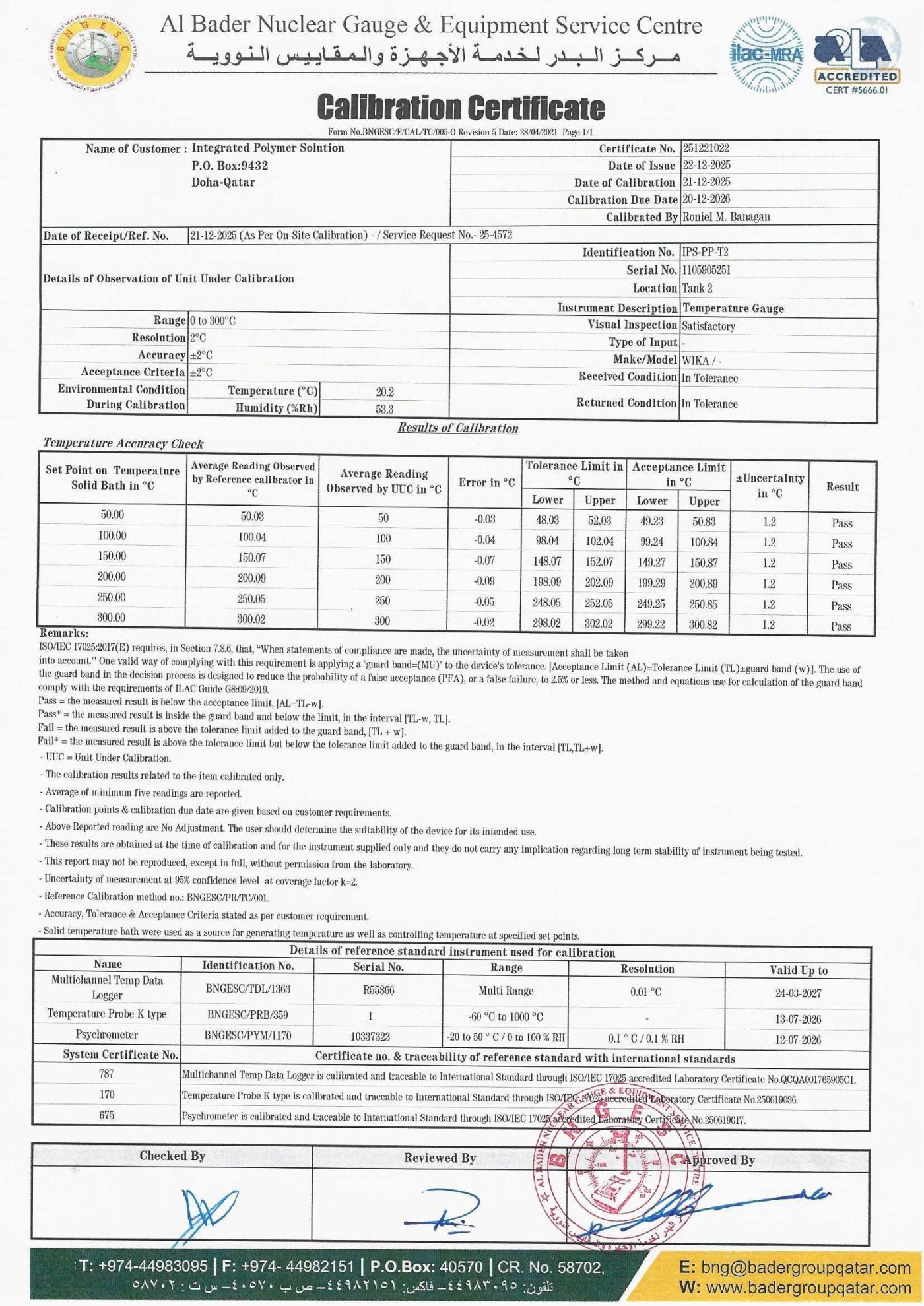 Temperature Gauge – Tank 2 (IPS-PP-T2)
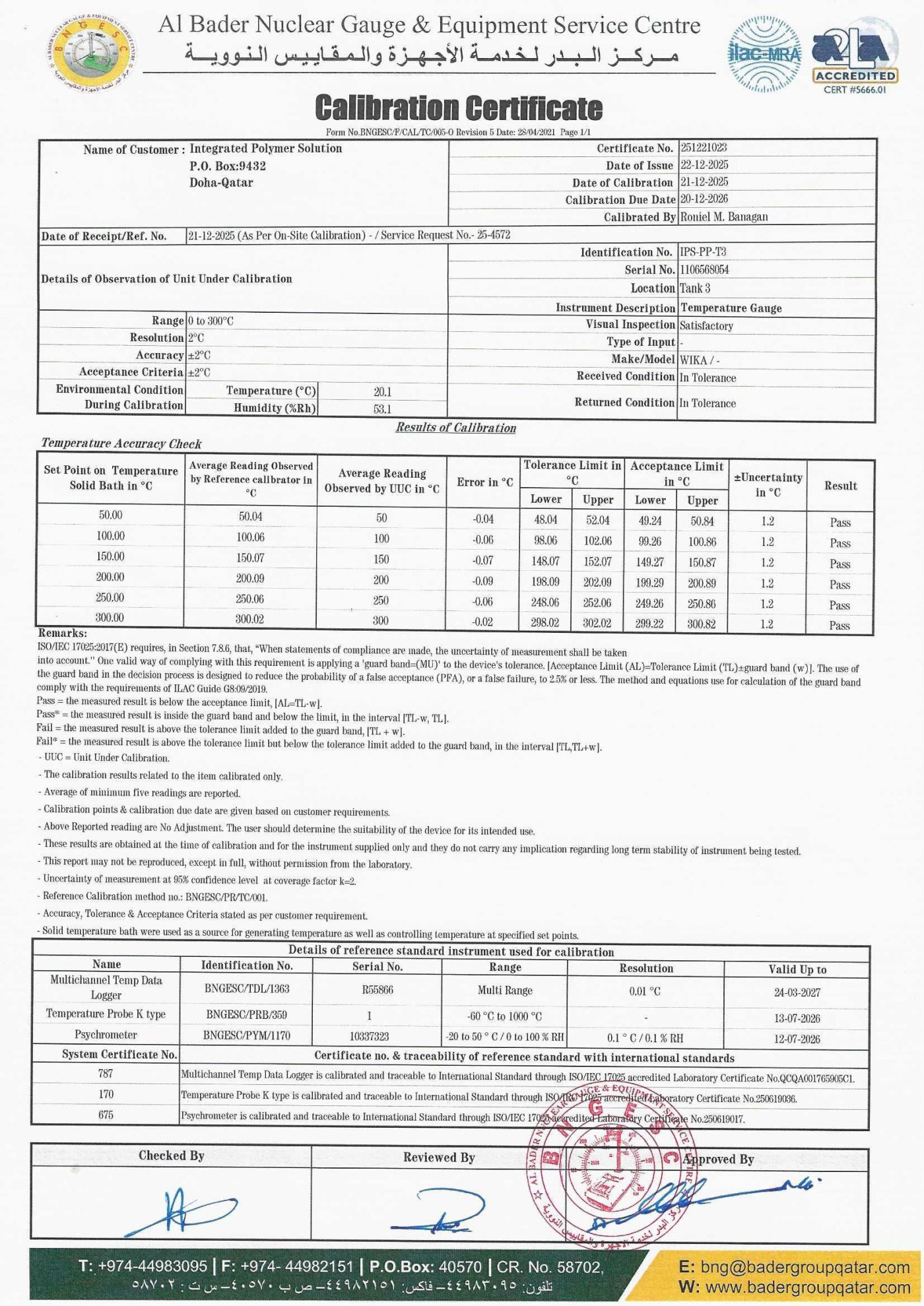 Temperature Gauge – Tank 3 (IPS-PP-T3)
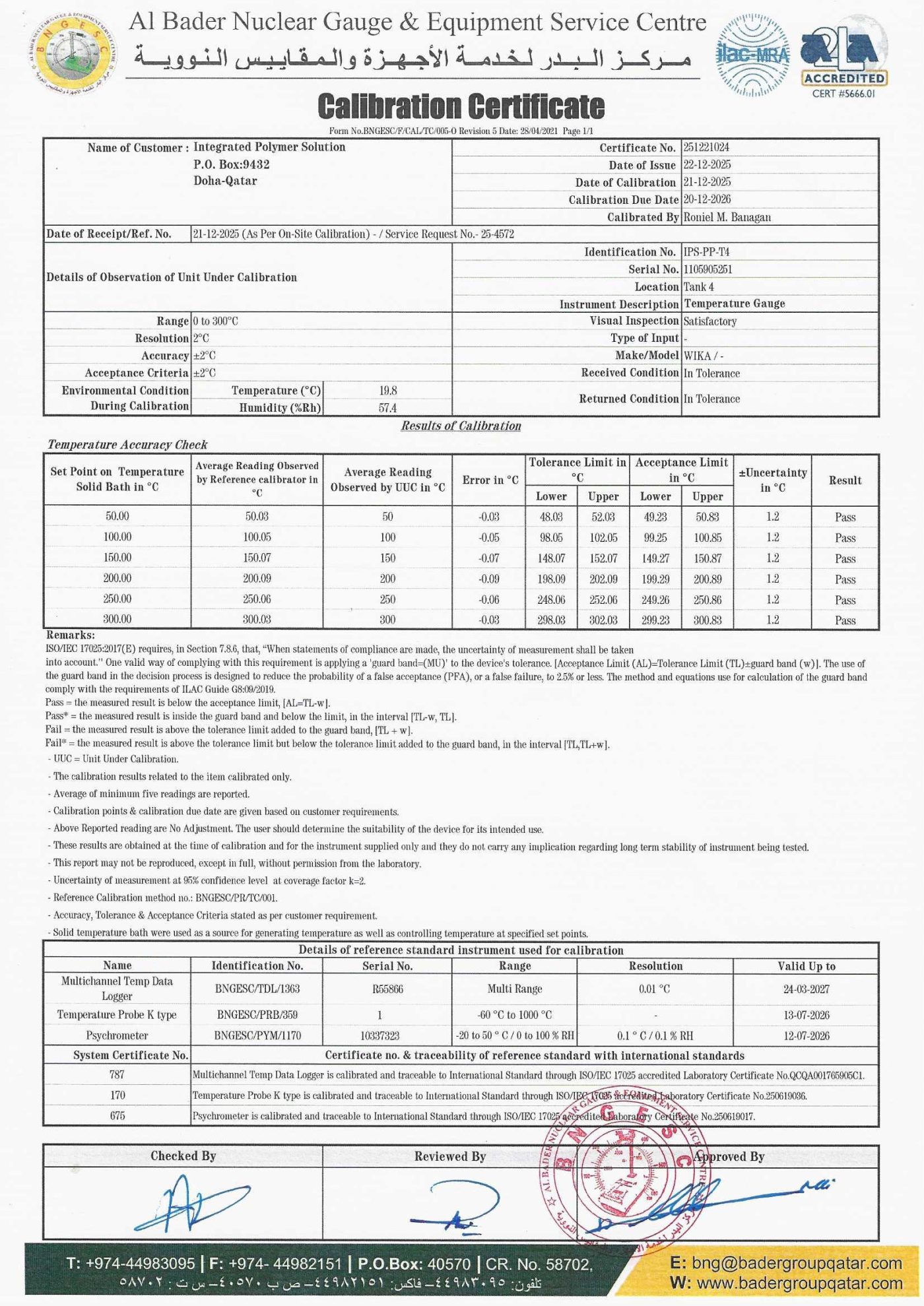 Temperature Gauge – Tank 4 (IPS-PP-T4)
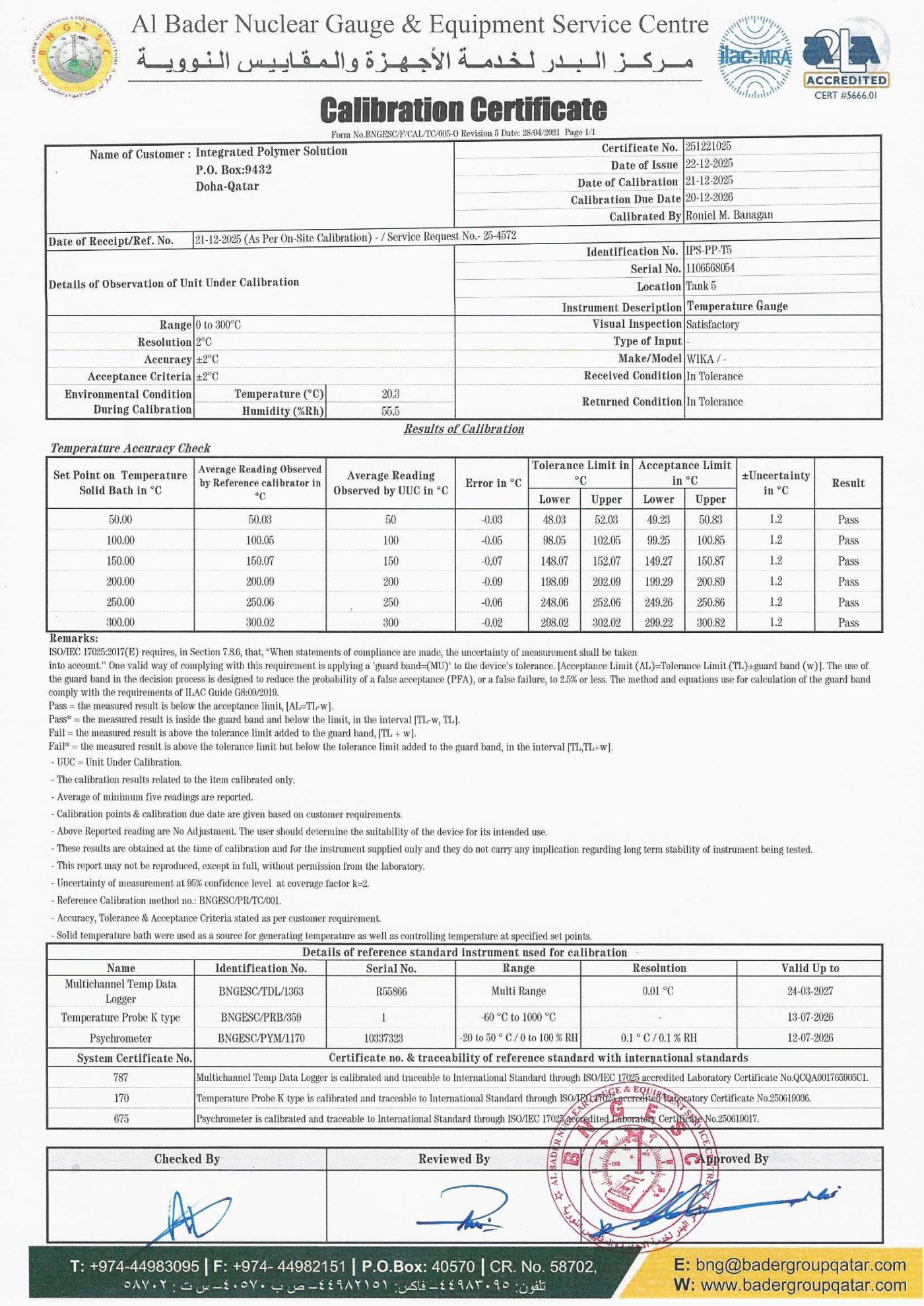 Temperature Gauge – Tank 5 (IPS-PP-T5)
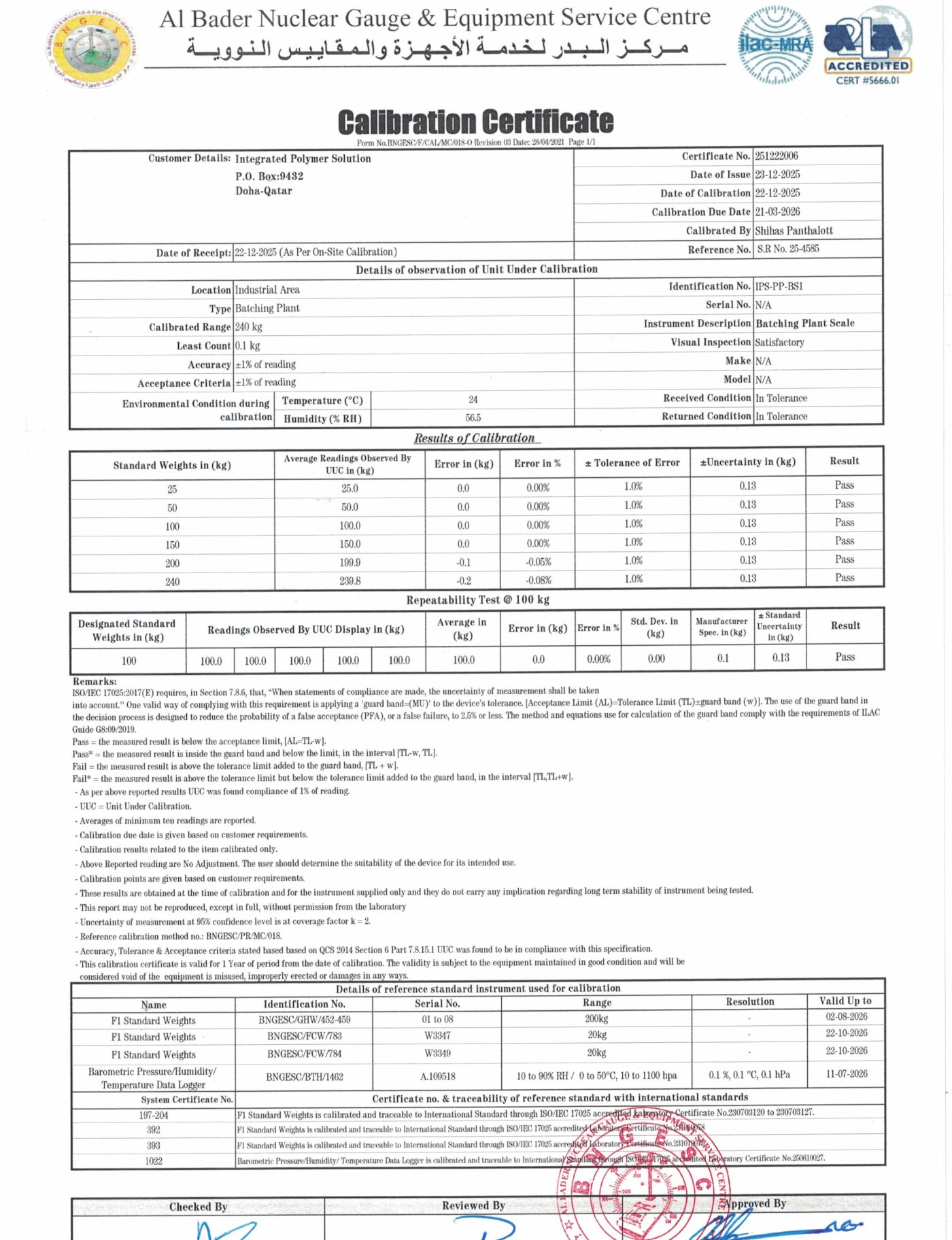 Batching Plant Scale – BS1 (IPS-PP-BS1)
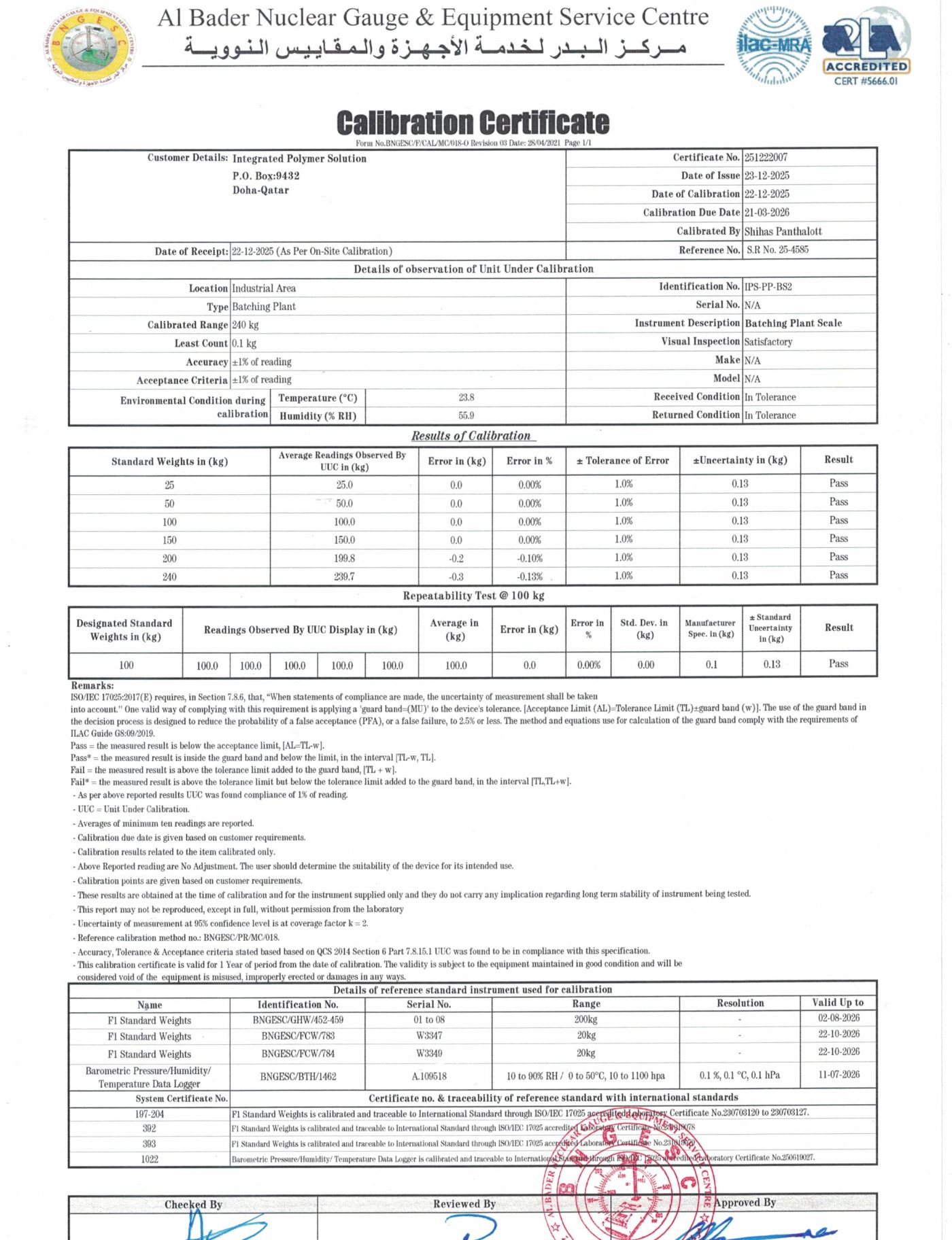 Batching Plant Scale – BS2 (IPS-PP-BS2)
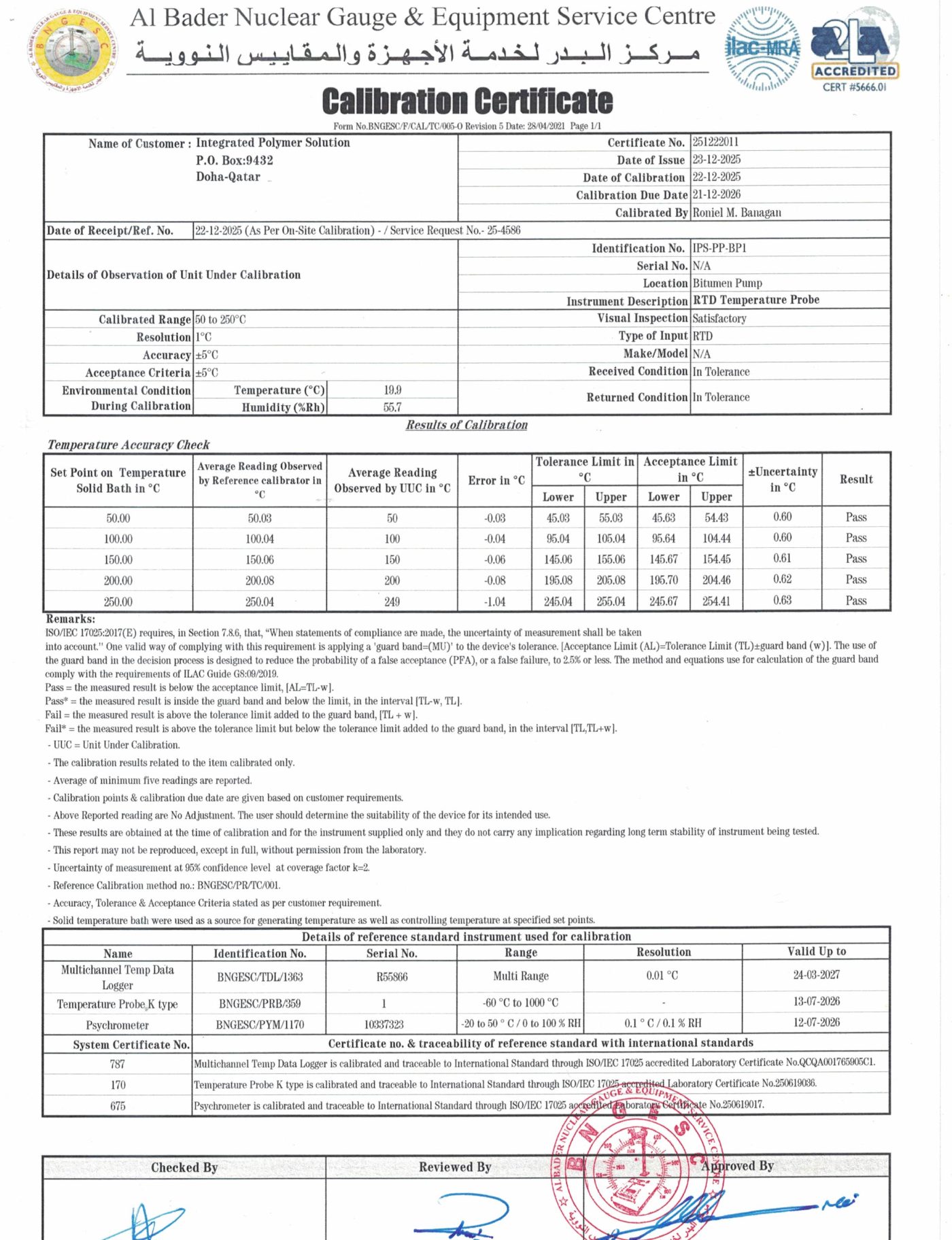 RTD Probe – Bitumen Pump (IPS-PP-BP1)
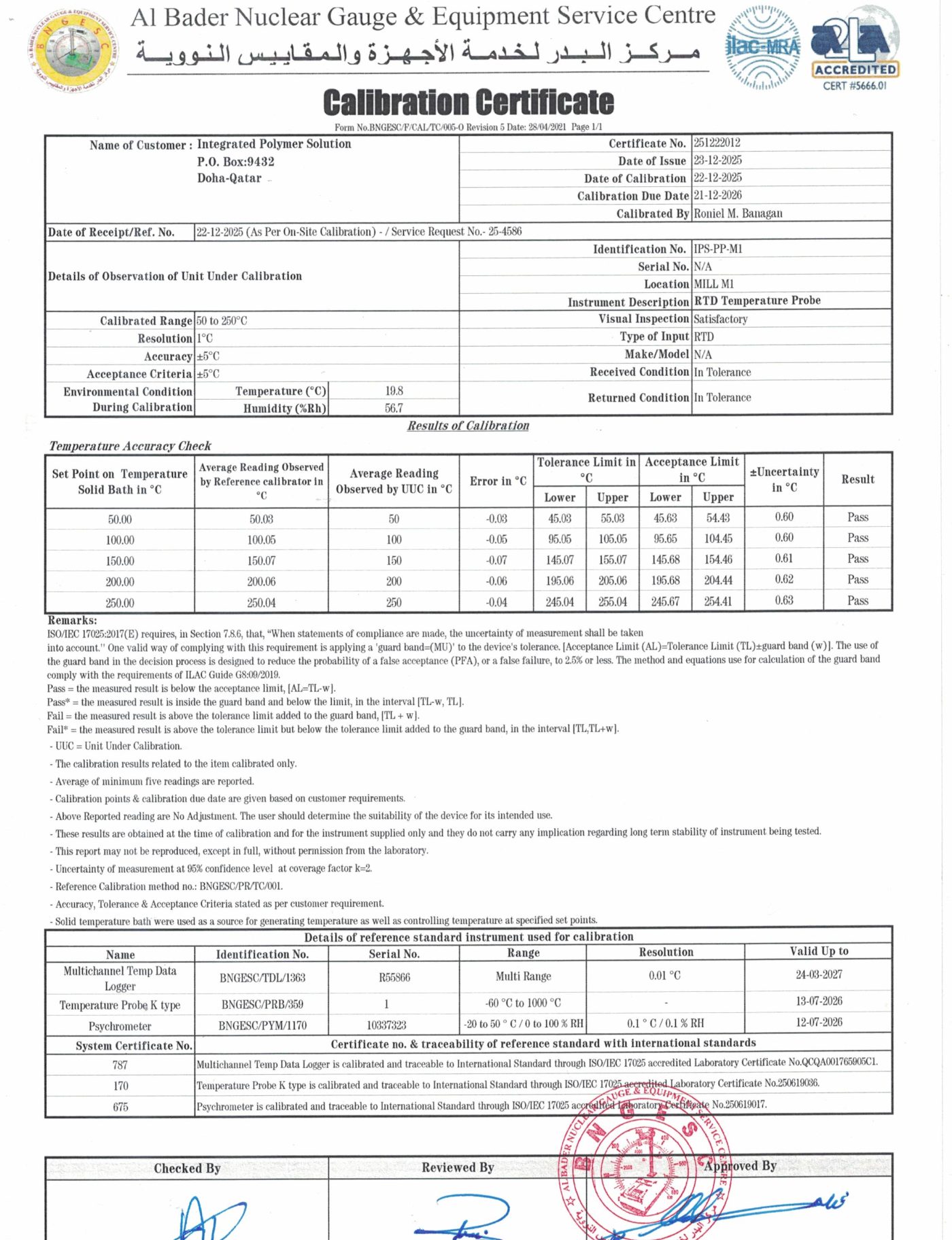 RTD Probe – Mill M1 (IPS-PP-M1)
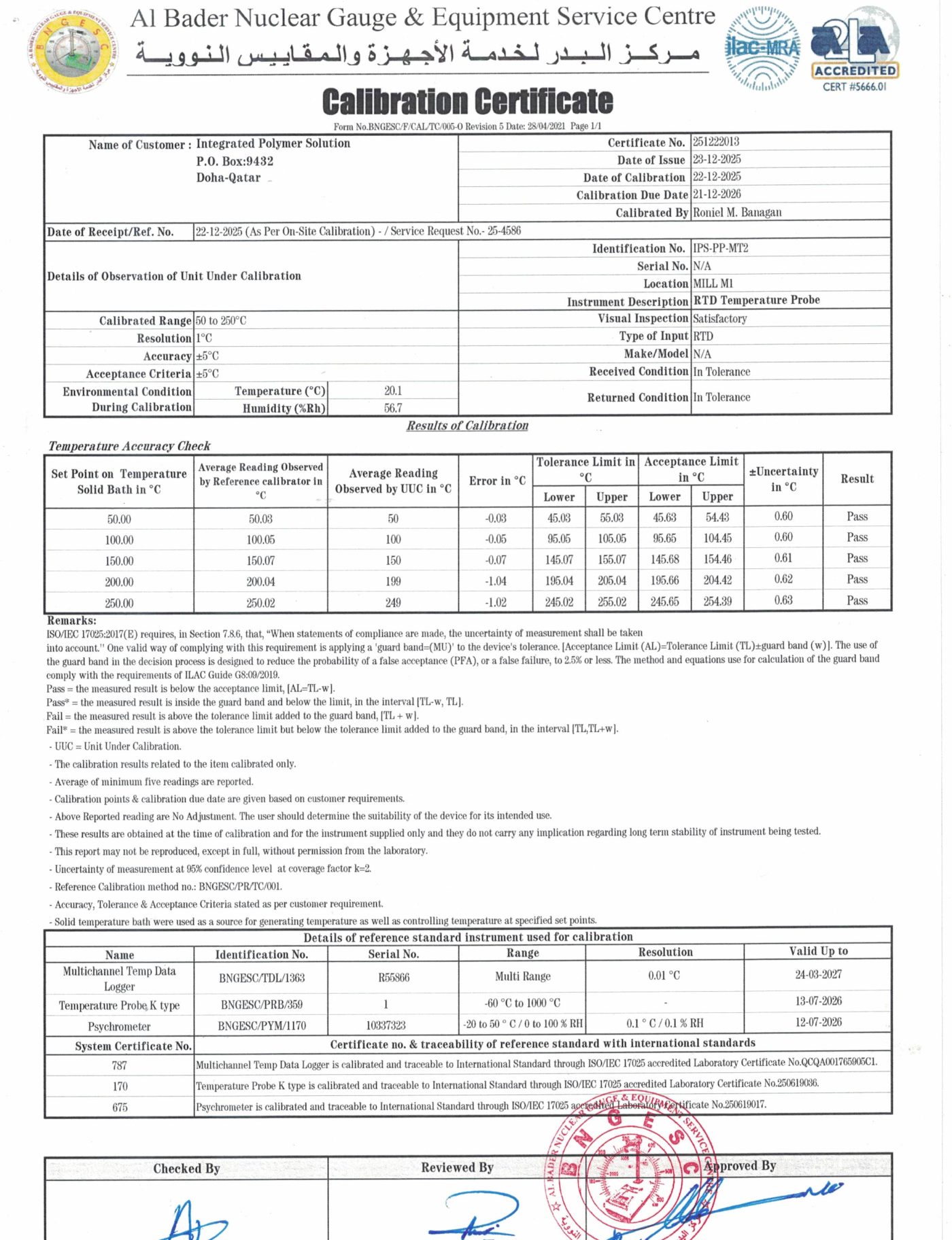 RTD Probe – Mill M1 (IPS-PP-MT2)
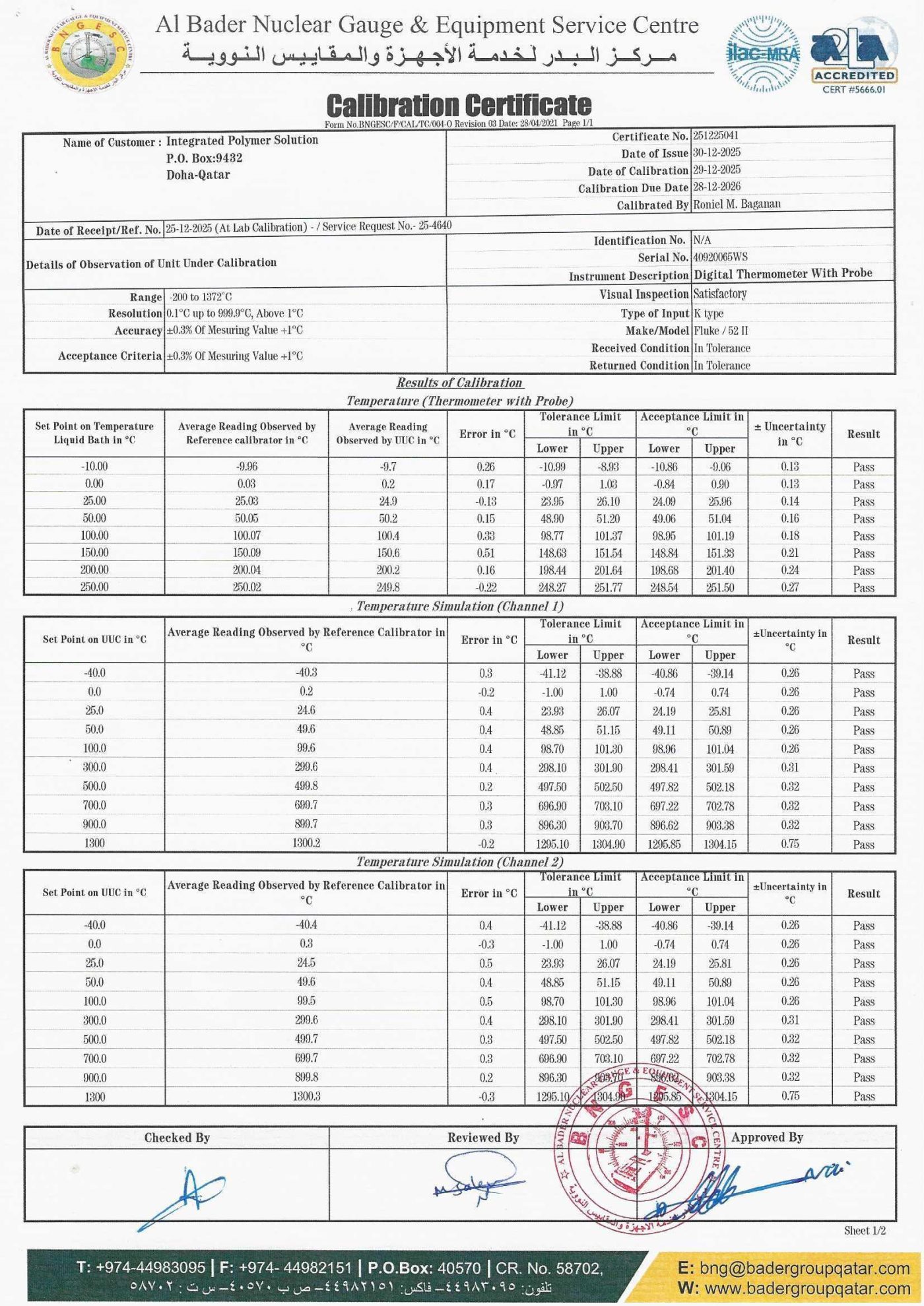 Digital Thermometer Fluke 52 II – Sheet 1/2
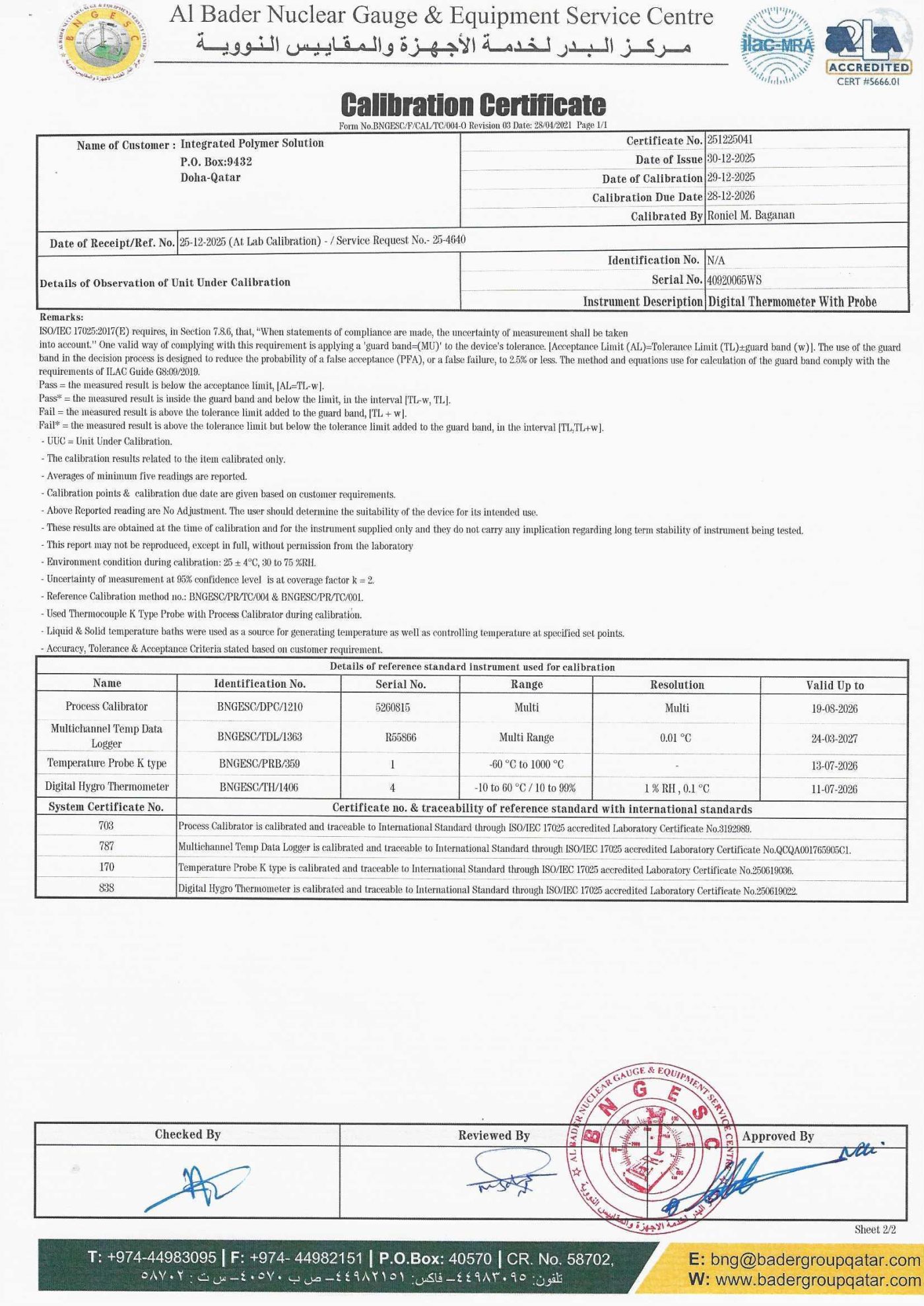 Digital Thermometer Fluke 52 II – Sheet 2/2
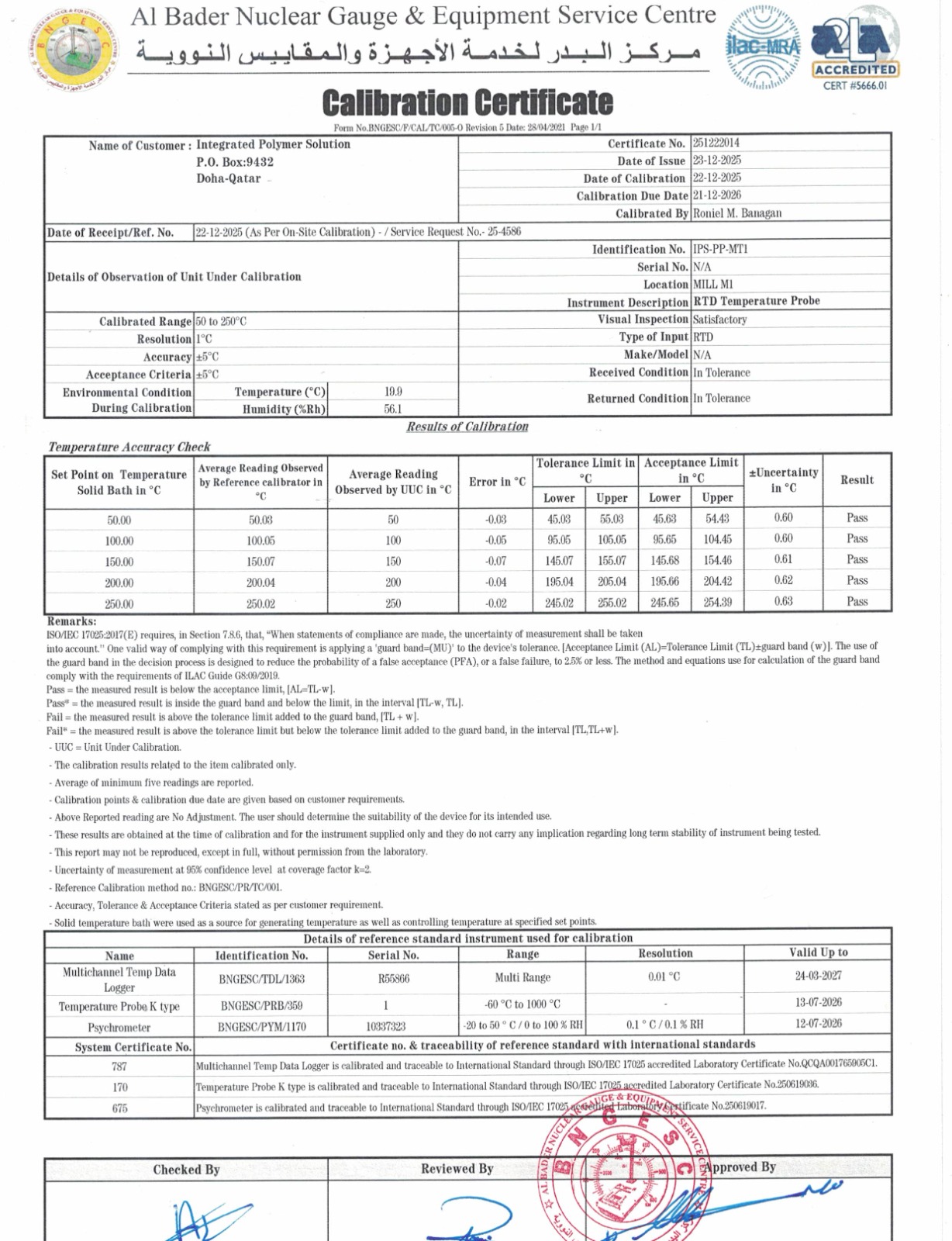 RTD Probe – Mill M1 (IPS-PP-MT1)
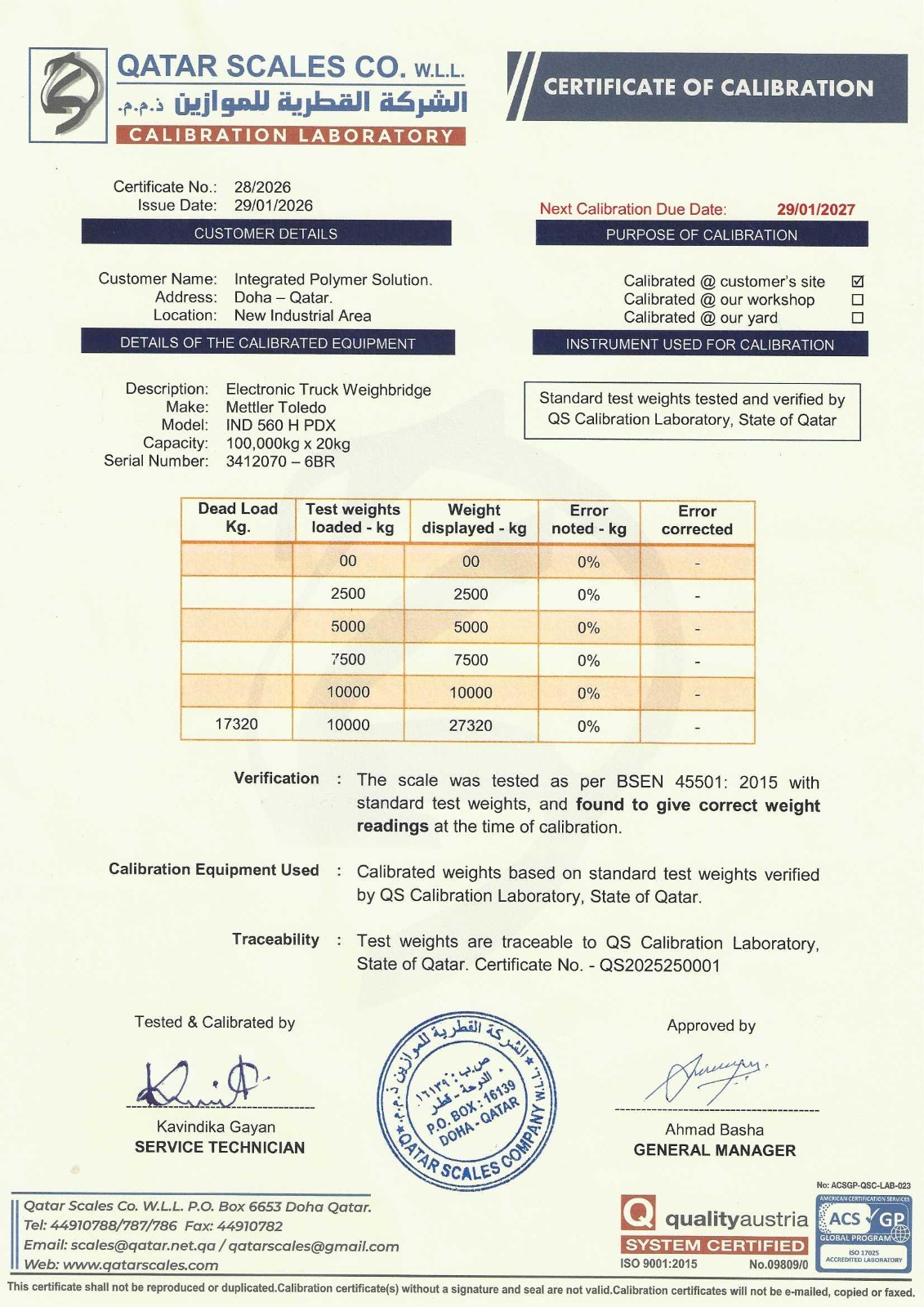 Truck Weighbridge 100 t – Qatar Scales
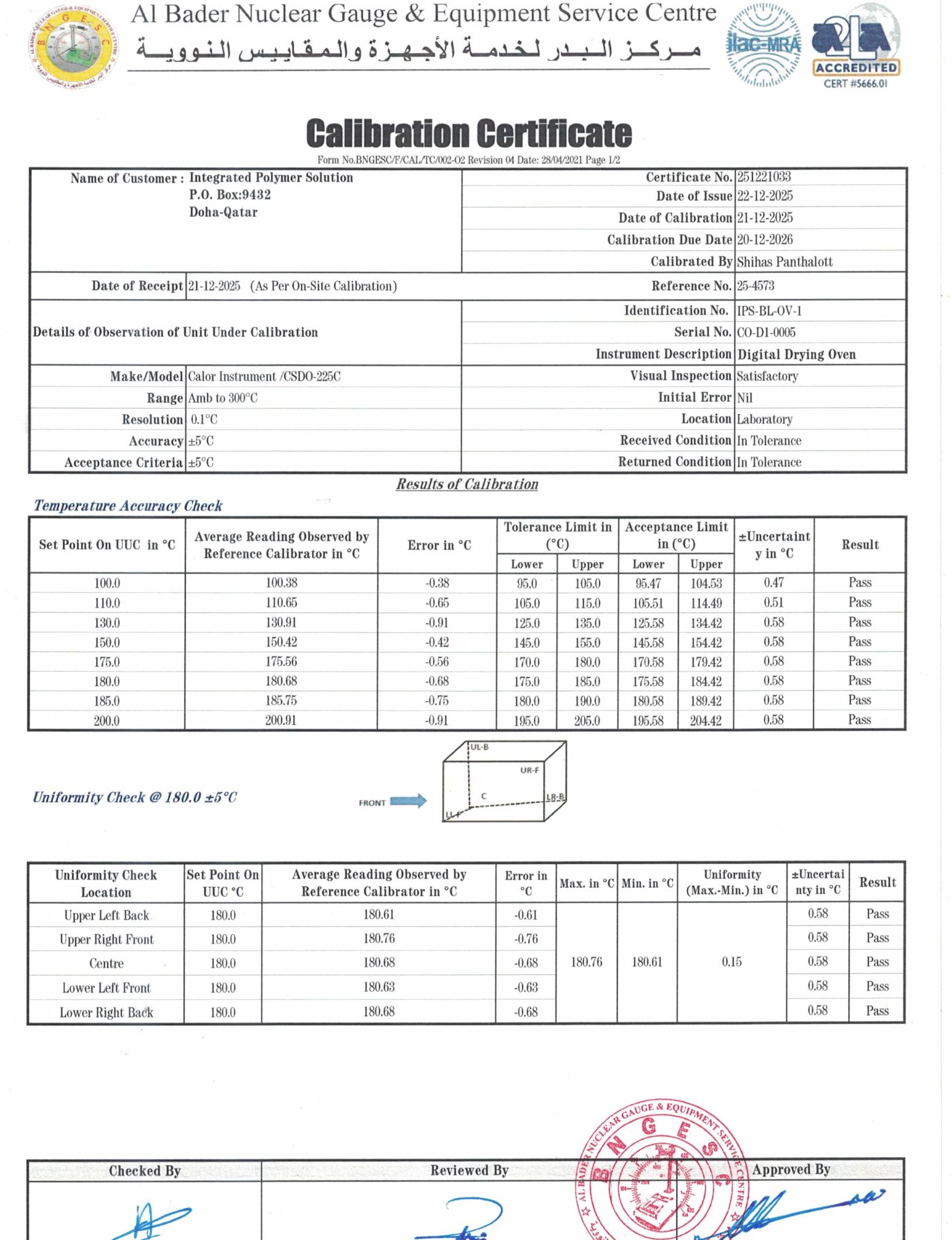 Digital Drying Oven (IPS-BL-OV-1) – Page 1/2
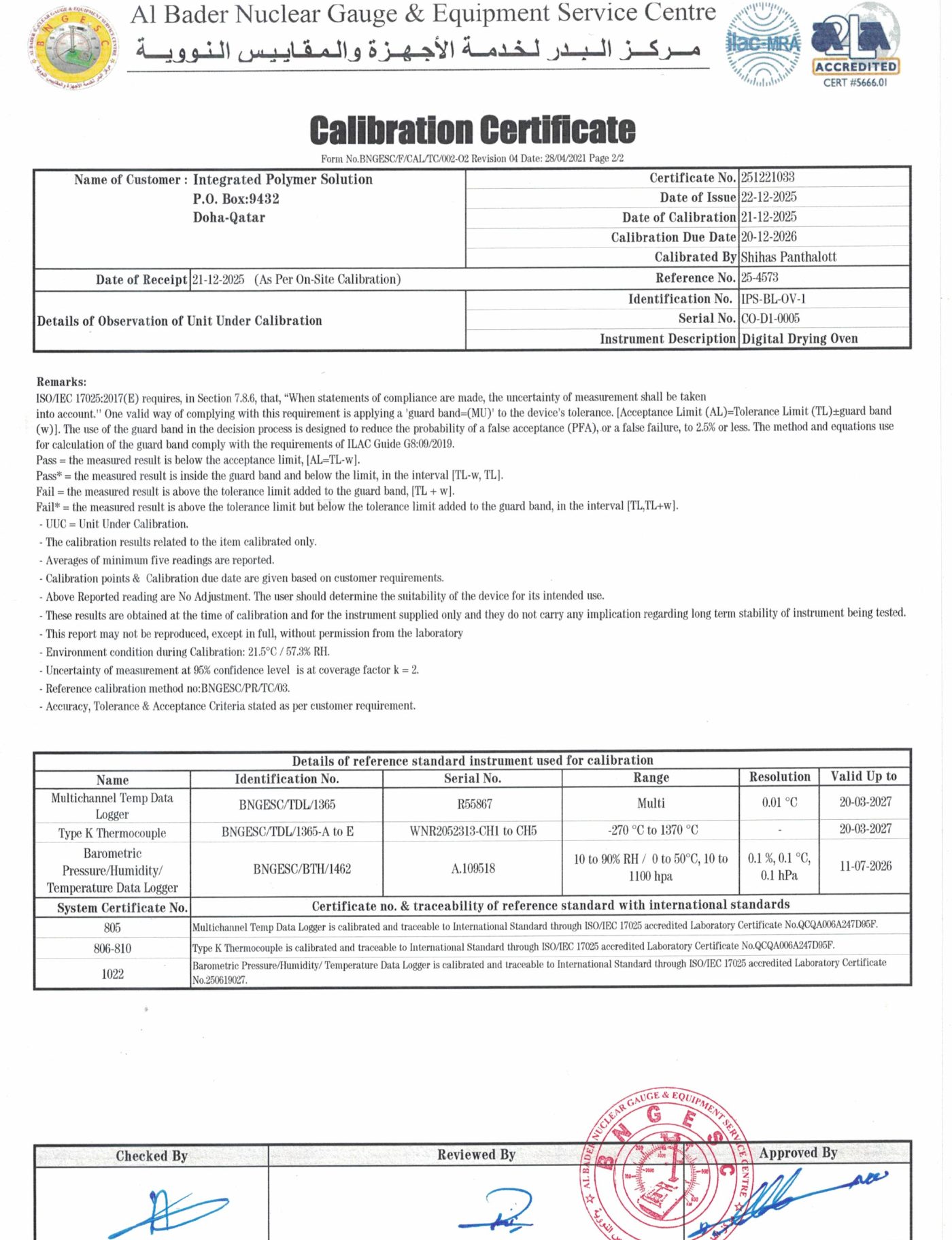 Digital Drying Oven (IPS-BL-OV-1) – Page 2/2
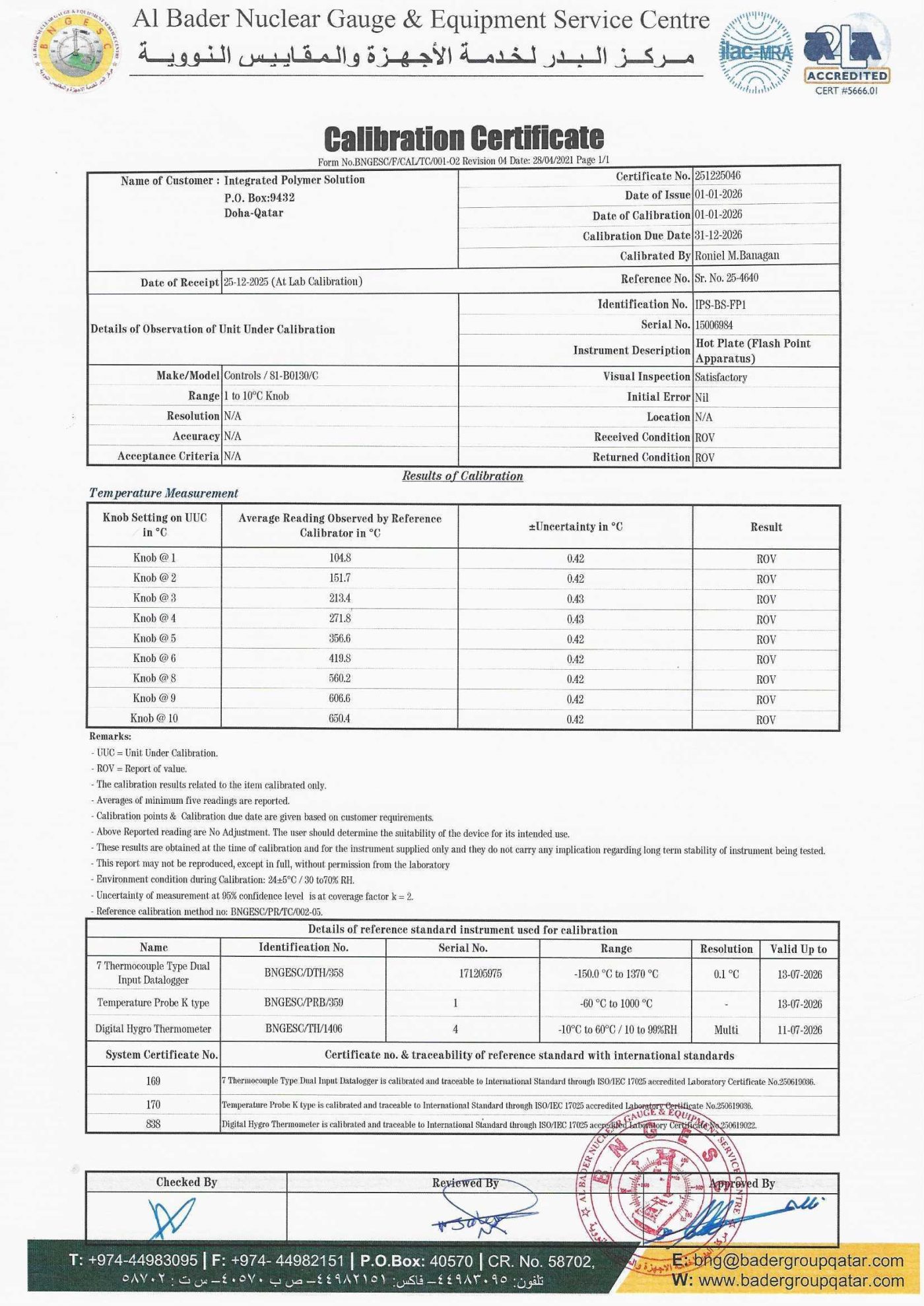 Hot Plate / Flash Point (IPS-BS-FP1)
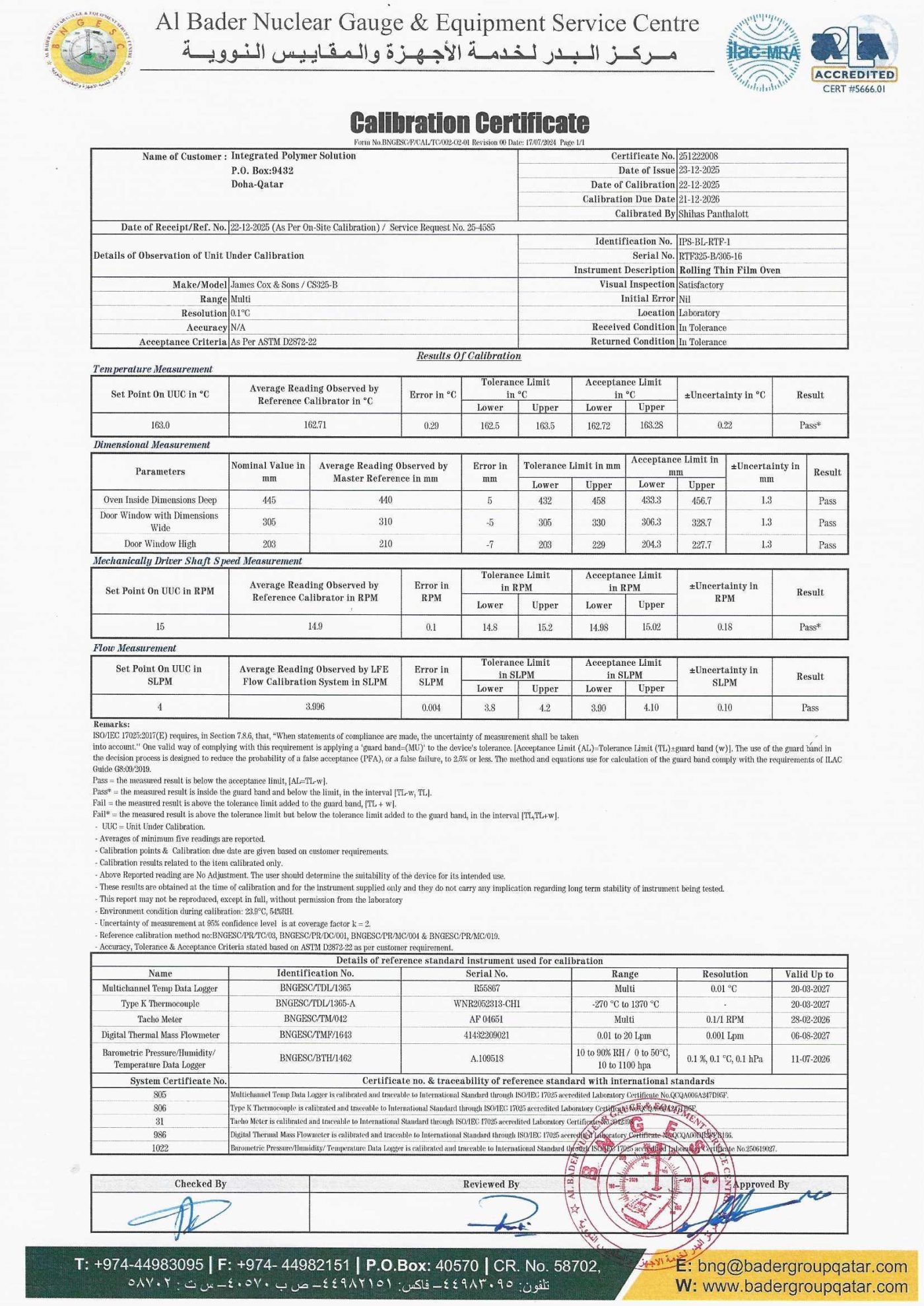 Rolling Thin Film Oven (IPS-BL-RTF-1)
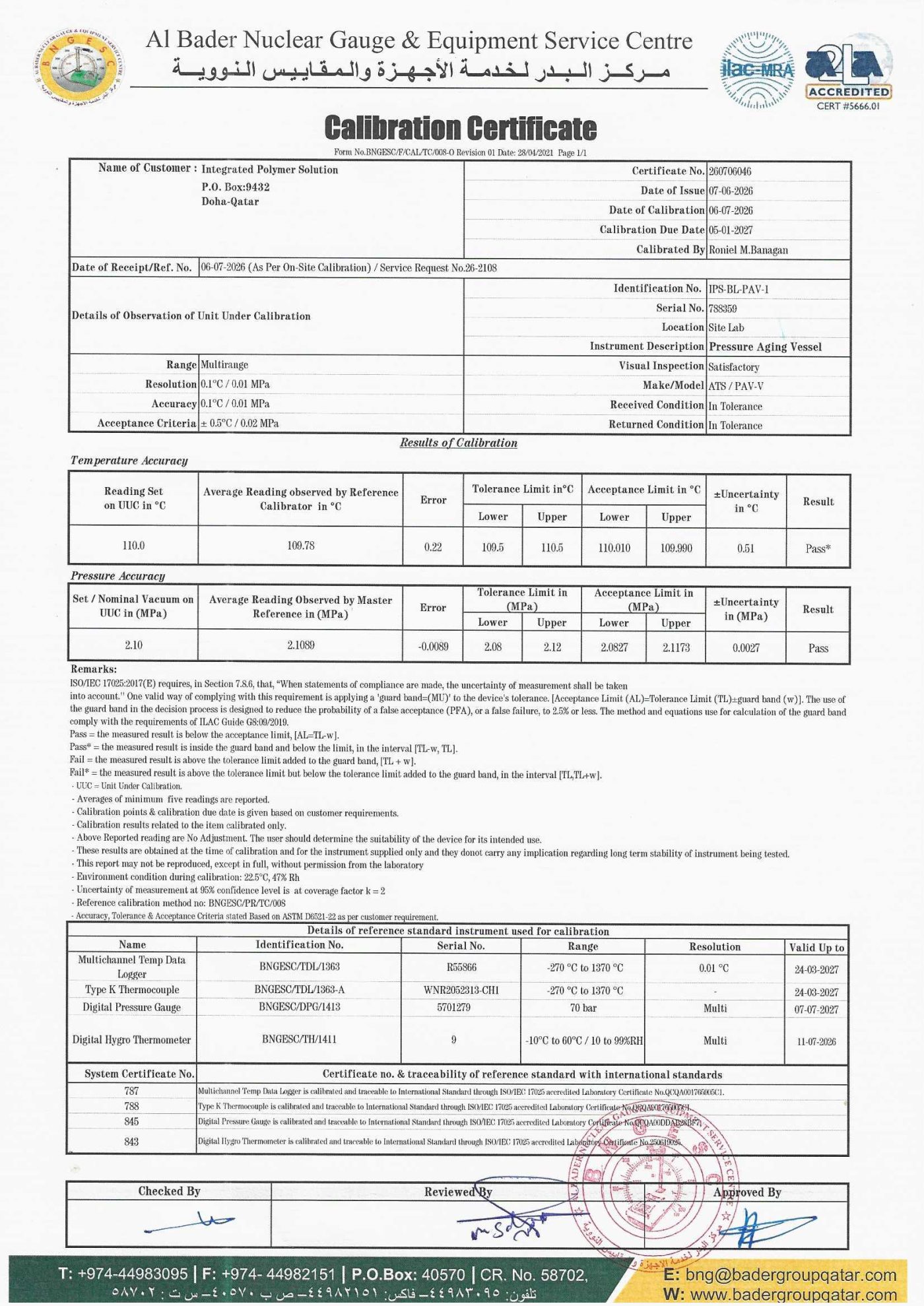 Pressure Aging Vessel (IPS-BL-PAV-1)
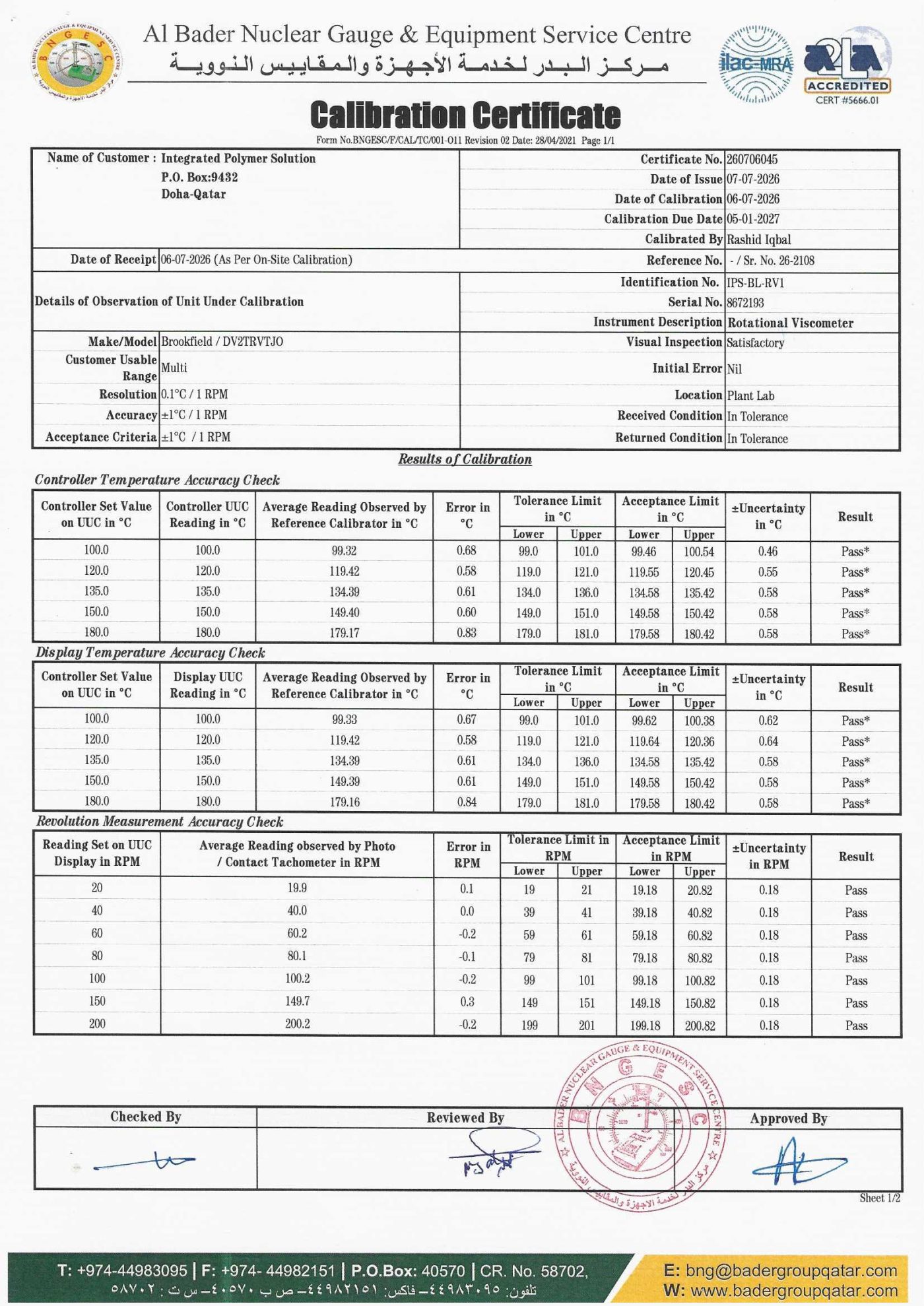 Rotational Viscometer (IPS-BL-RV1) – Sheet 1/2
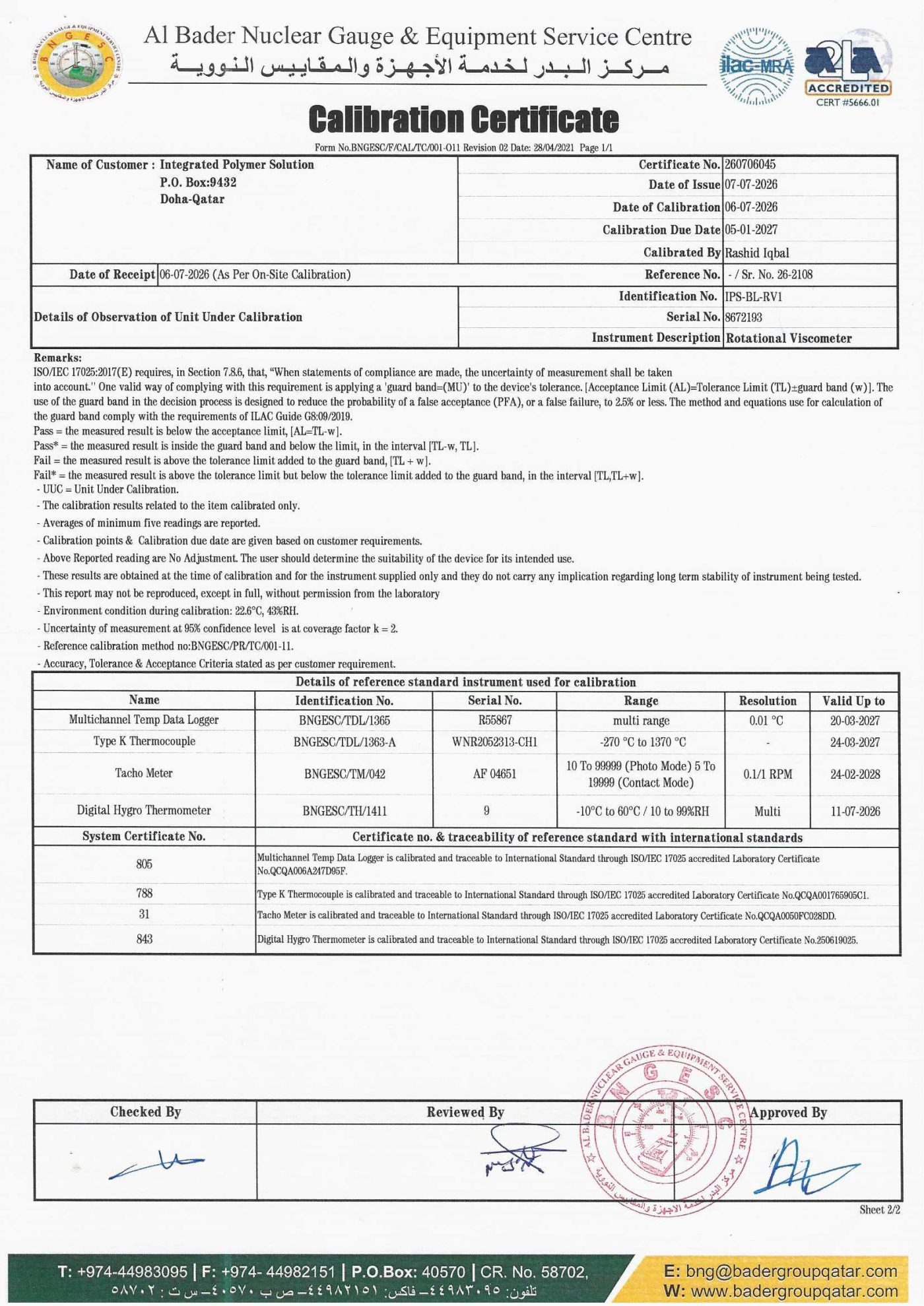 Rotational Viscometer (IPS-BL-RV1) – Sheet 2/2
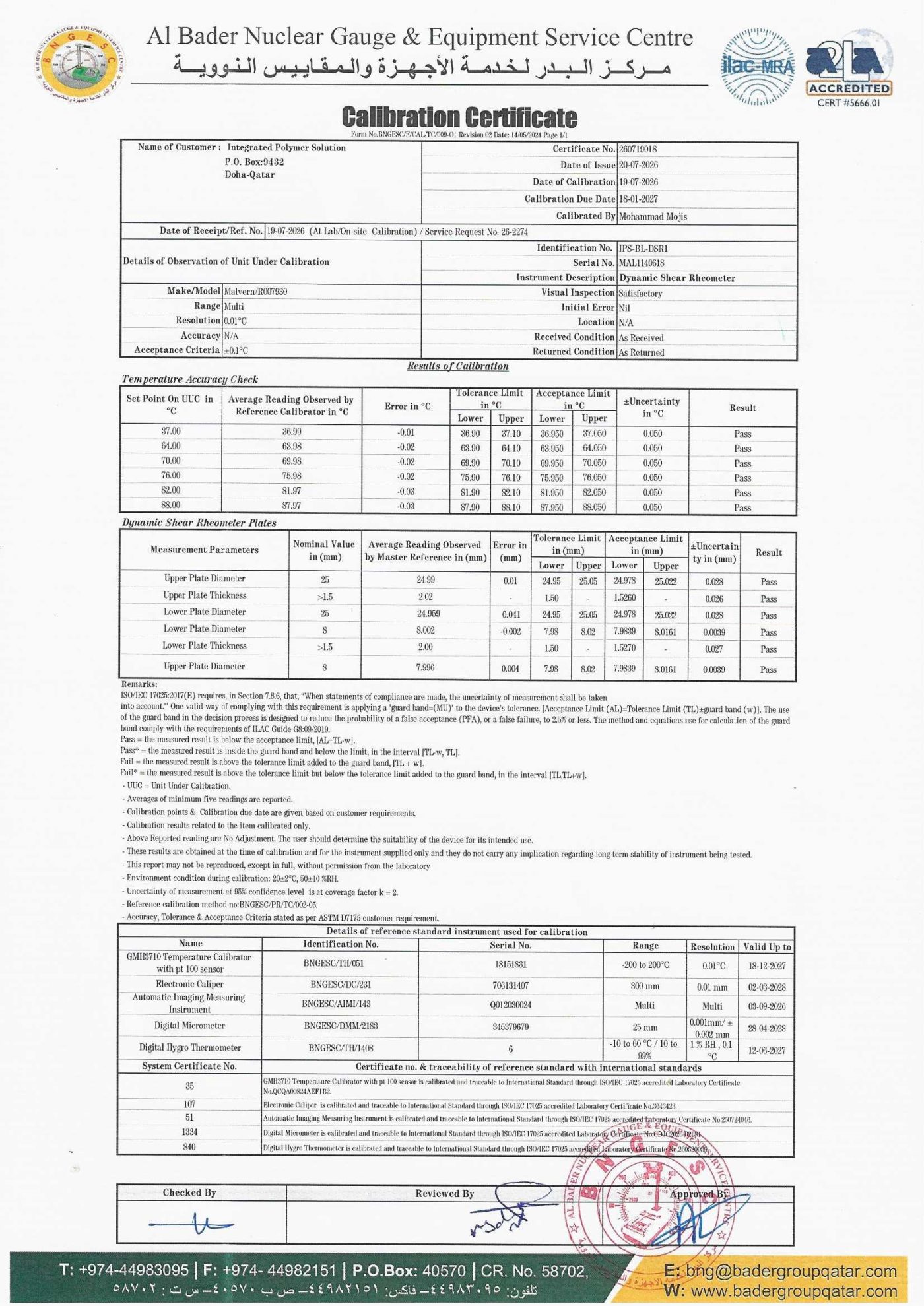 Dynamic Shear Rheometer (IPS-BL-DSR1)
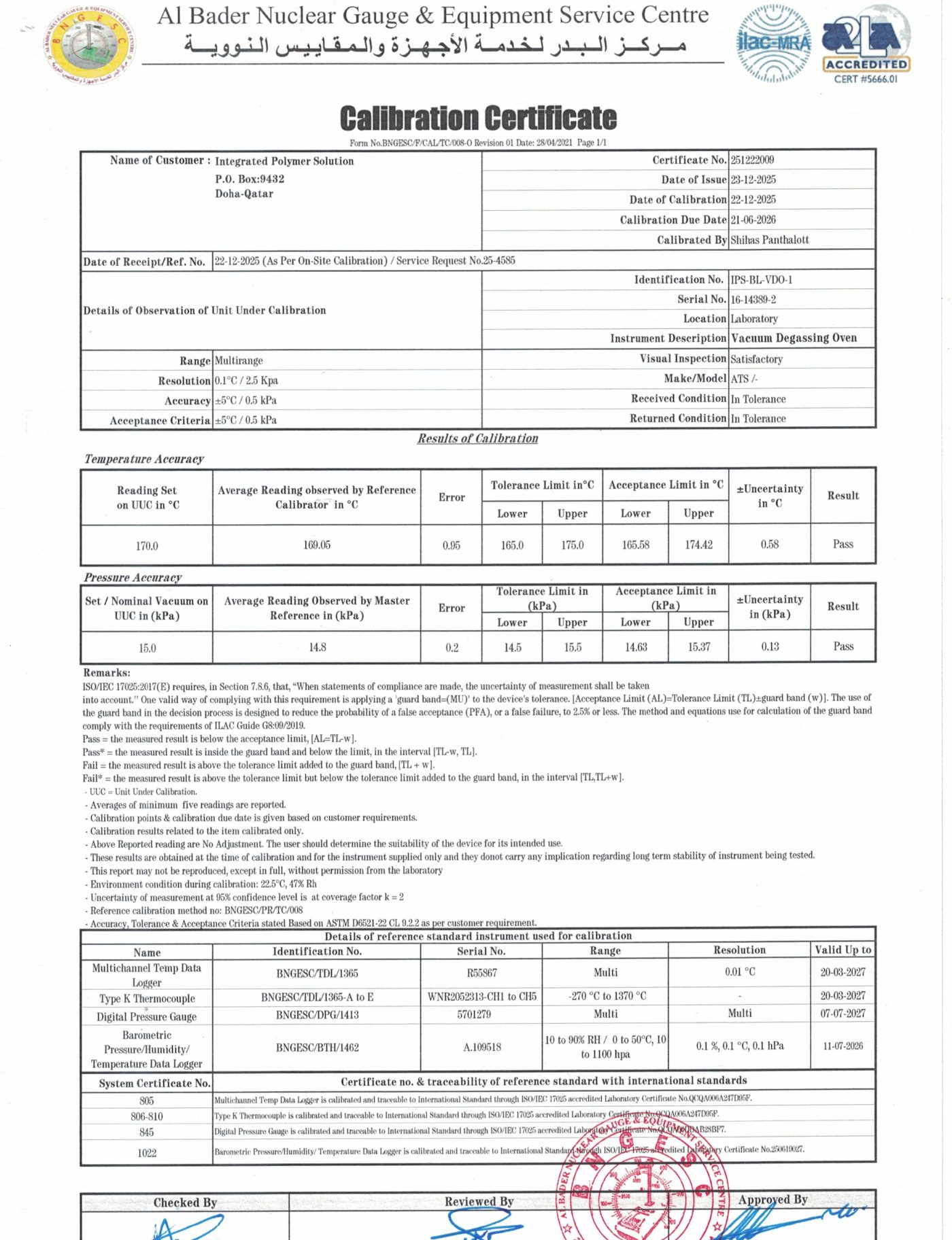 Vacuum Degassing Oven (IPS-BL-VDO-1)
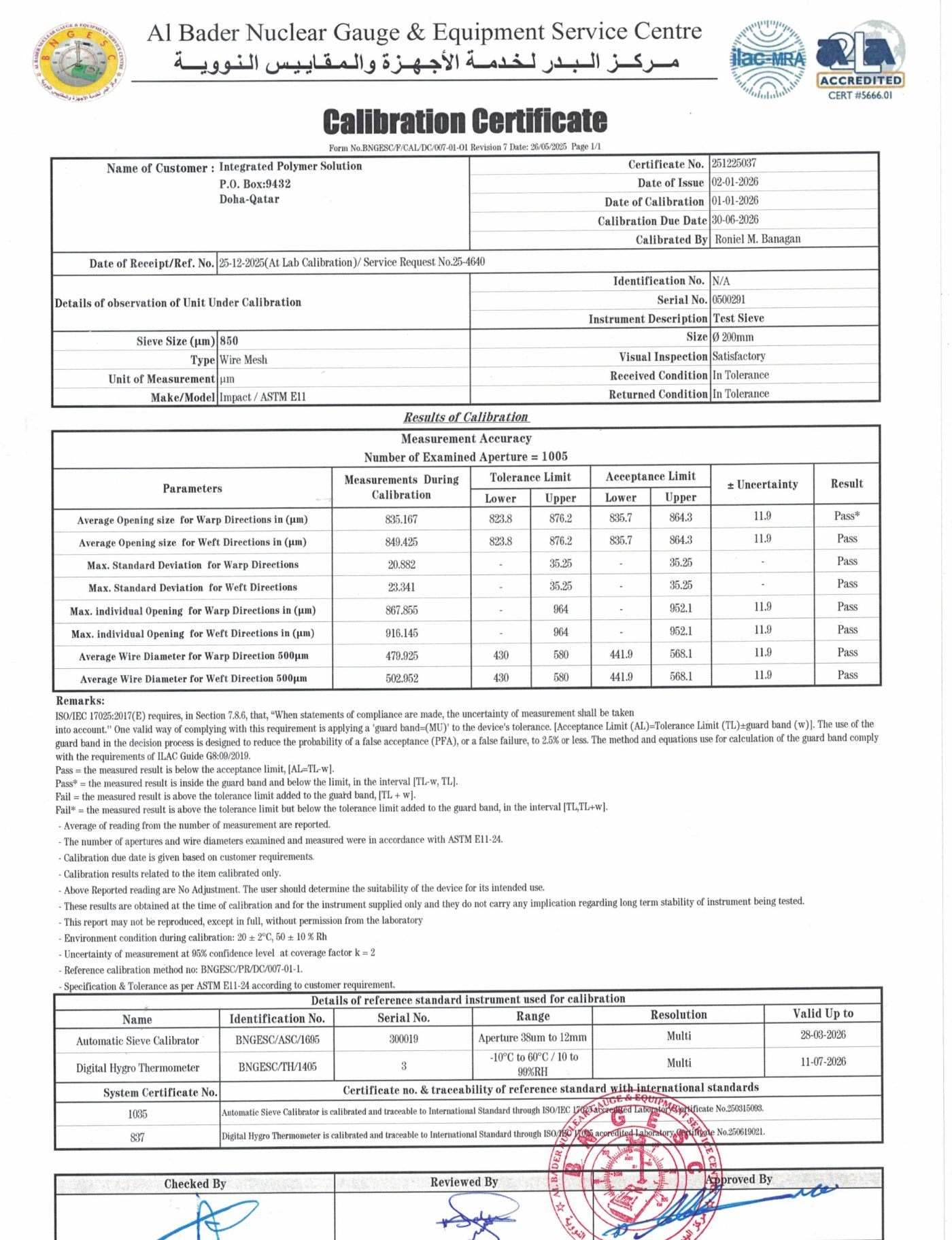 Test Sieve 850 µm (ASTM E11)
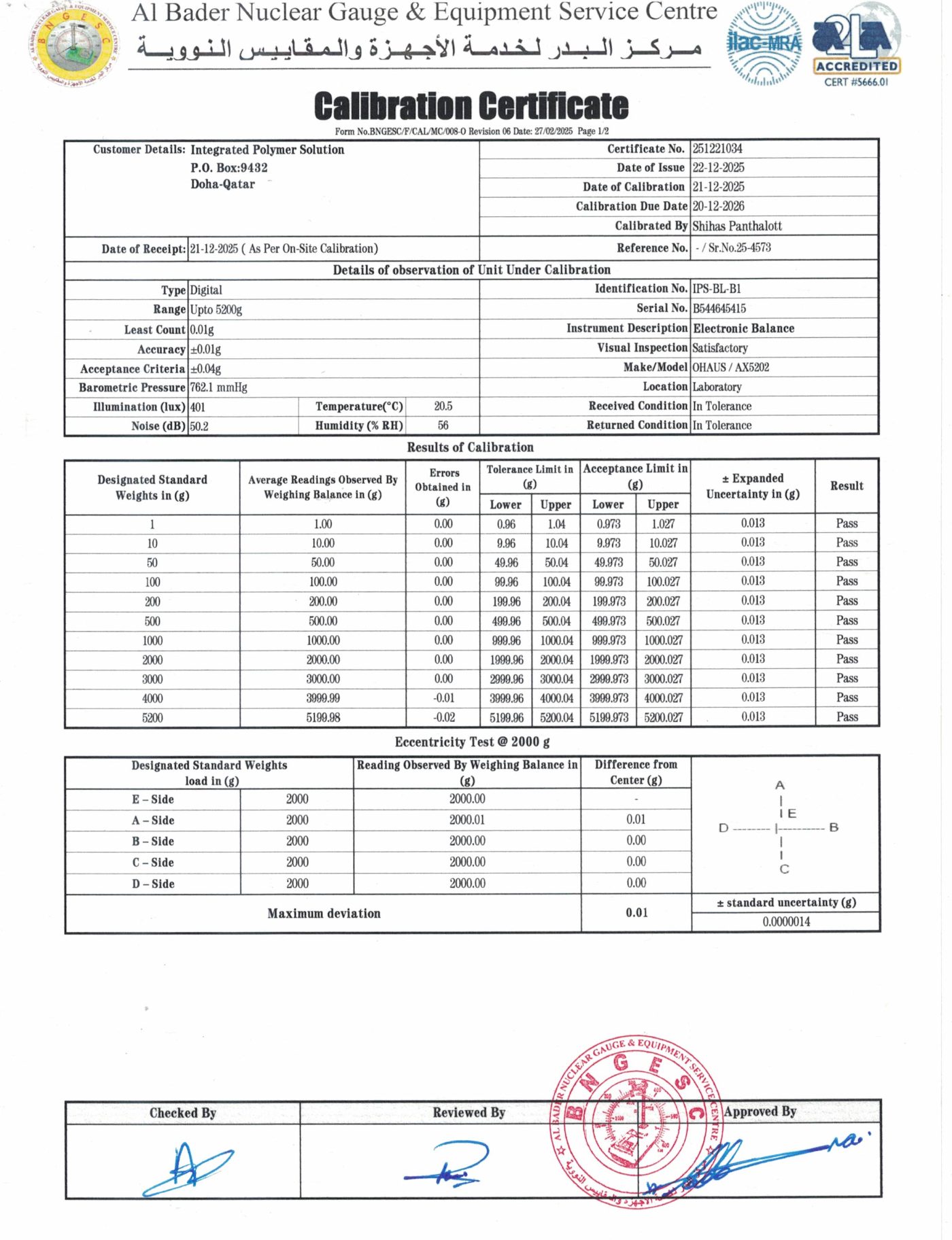 Balance OHAUS AX5202 (IPS-BL-B1) – Page 1/2
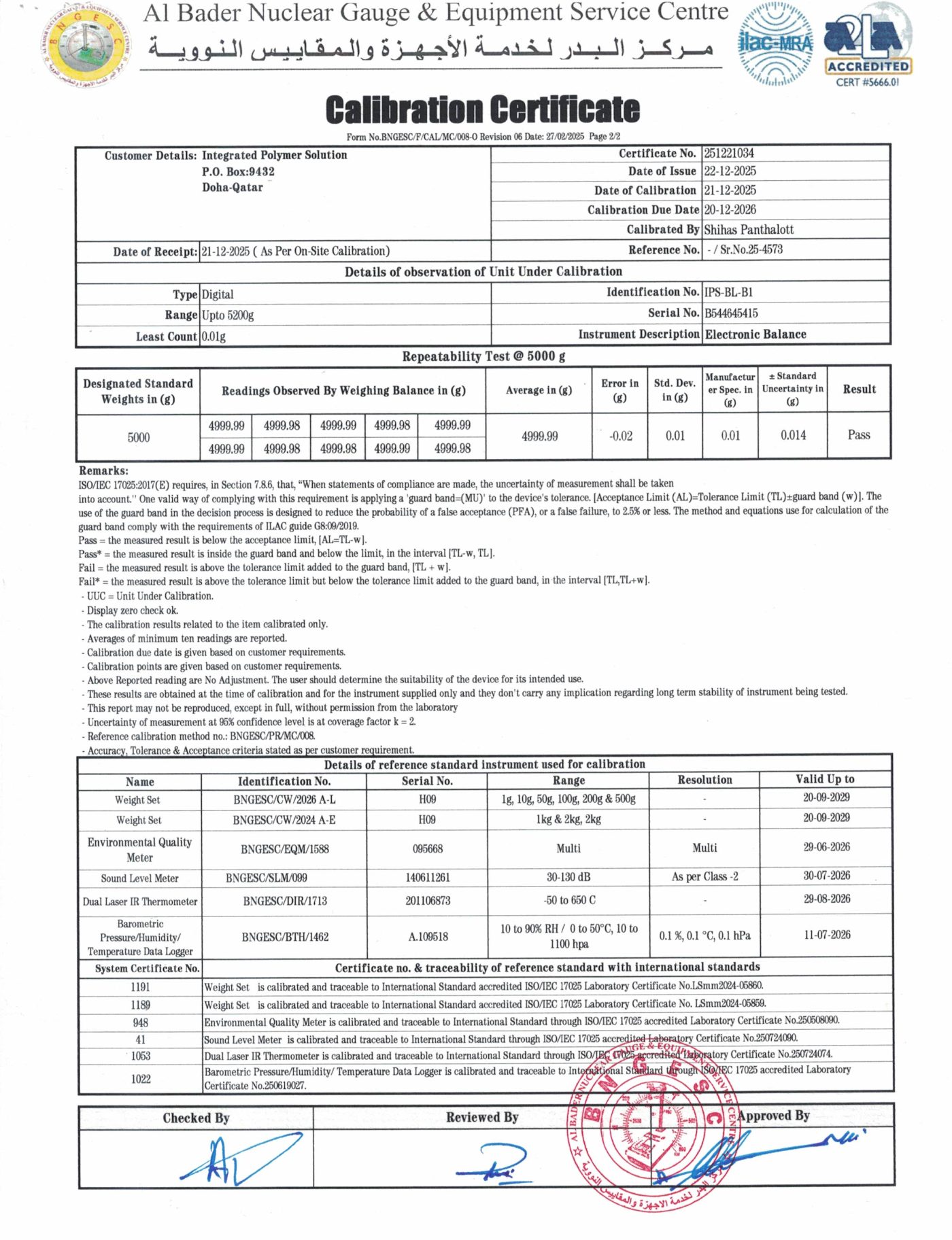 Balance OHAUS AX5202 (IPS-BL-B1) – Page 2/2
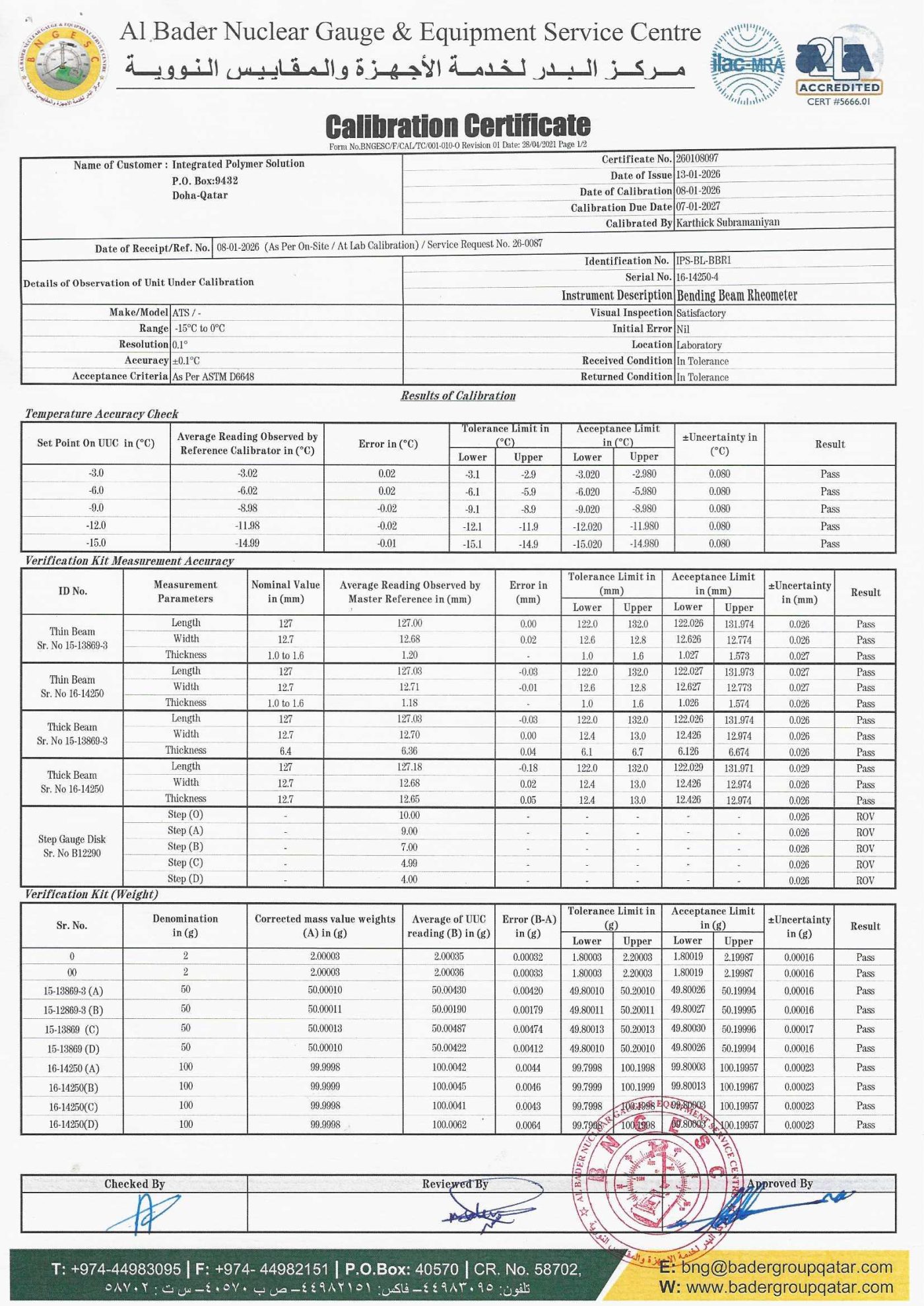 Bending Beam Rheometer (IPS-BL-BBR1) – Page 1/2
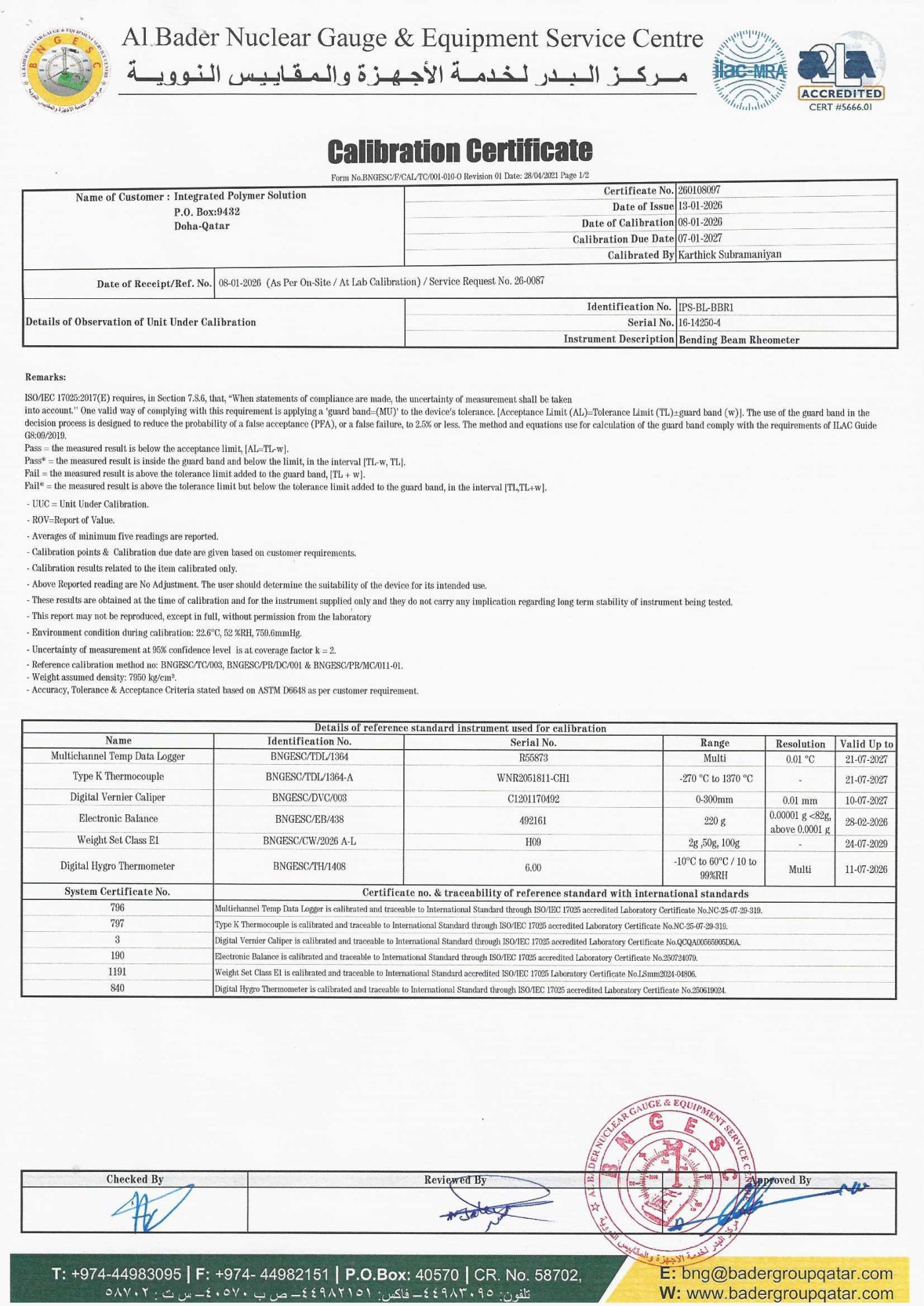 Bending Beam Rheometer (IPS-BL-BBR1) – Page 2/2
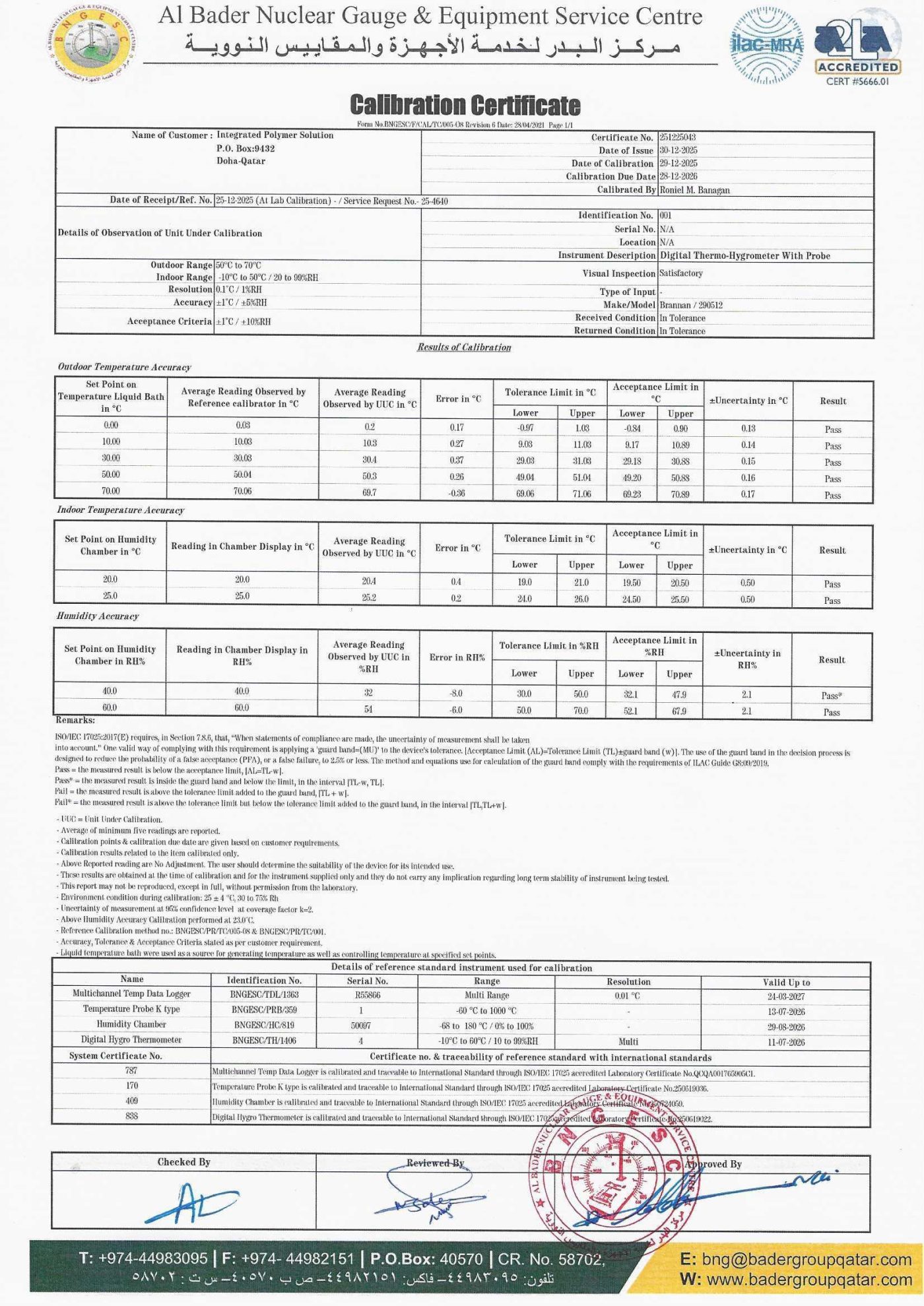 Digital Thermo-Hygrometer (Brannan 290512)
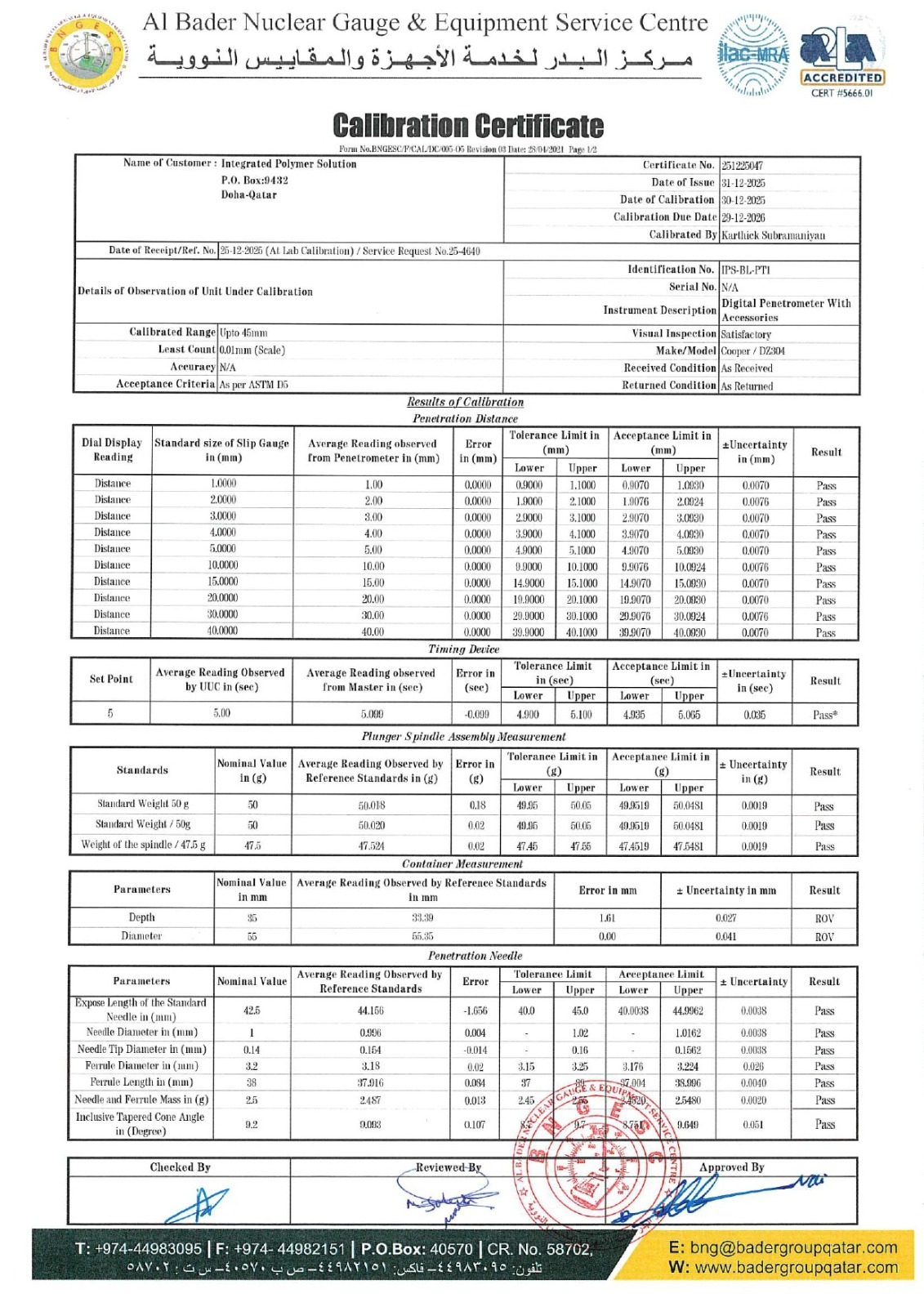 Digital Penetrometer (IPS-BL-PT1) – Page 1/2
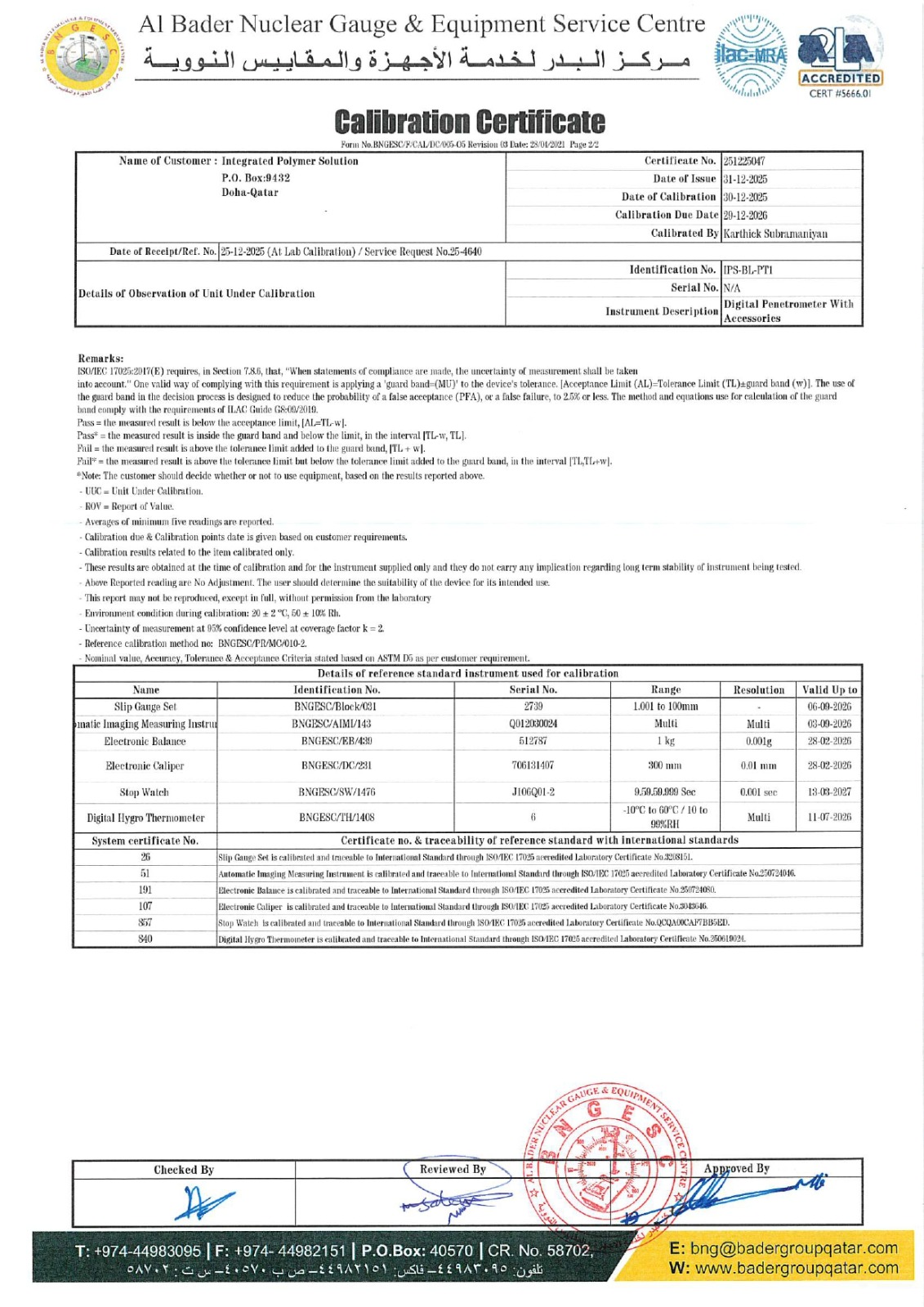 Digital Penetrometer (IPS-BL-PT1) – Page 2/2
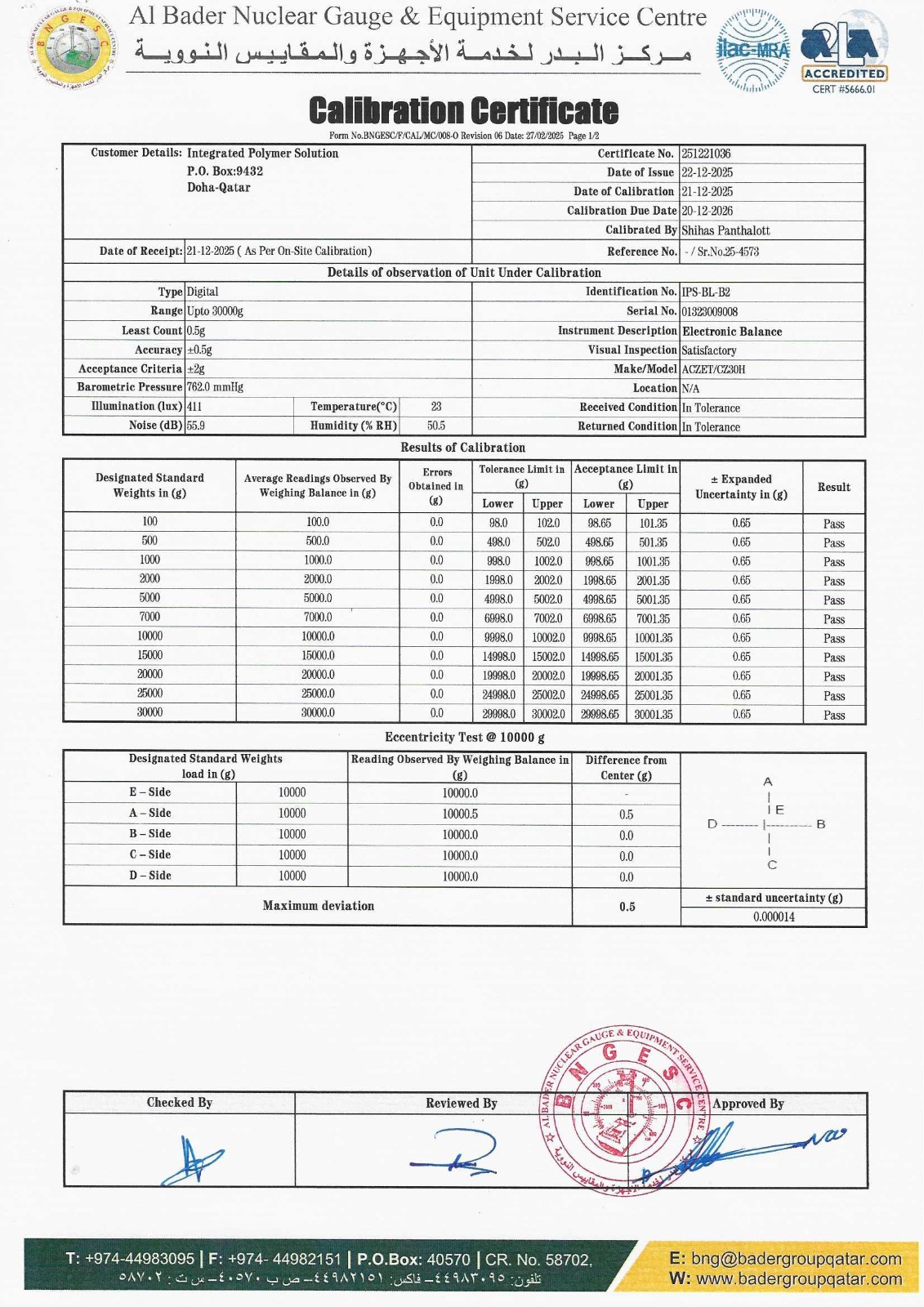 Balance ACZET CZ30H (IPS-BL-B2) – Page 1/2
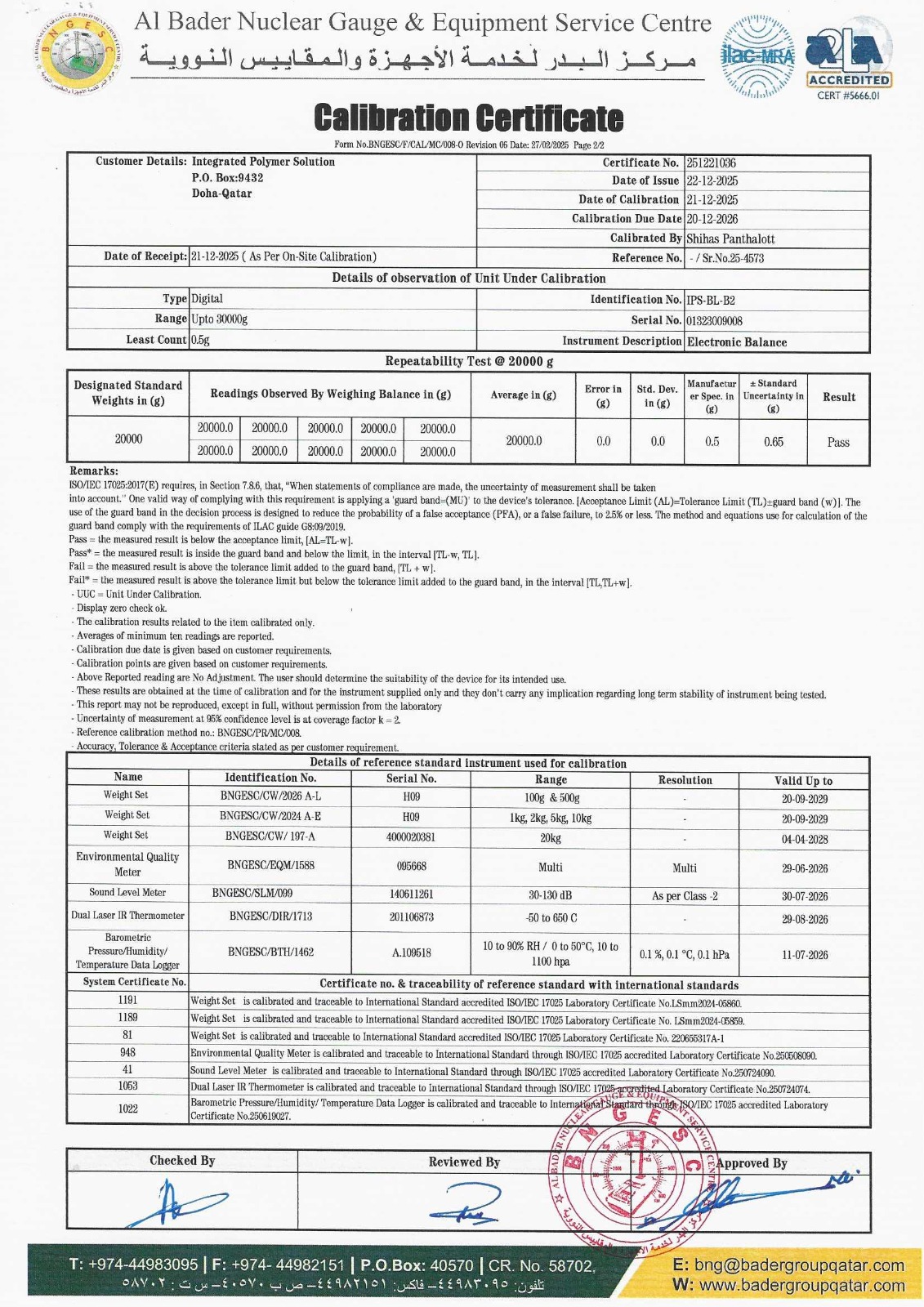 Balance ACZET CZ30H (IPS-BL-B2) – Page 2/2
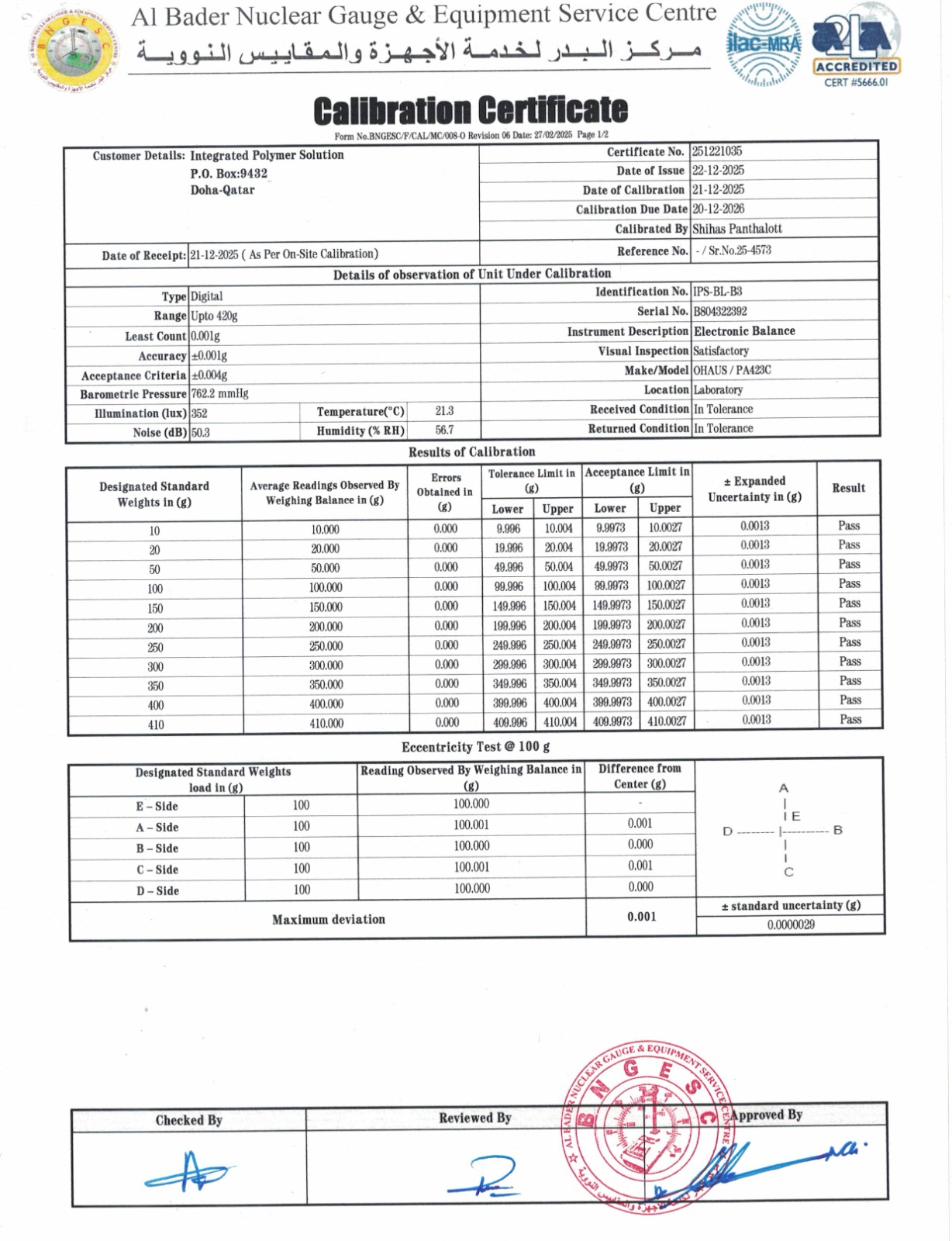 Balance OHAUS PA4202C (IPS-BL-B3) – Page 1/2
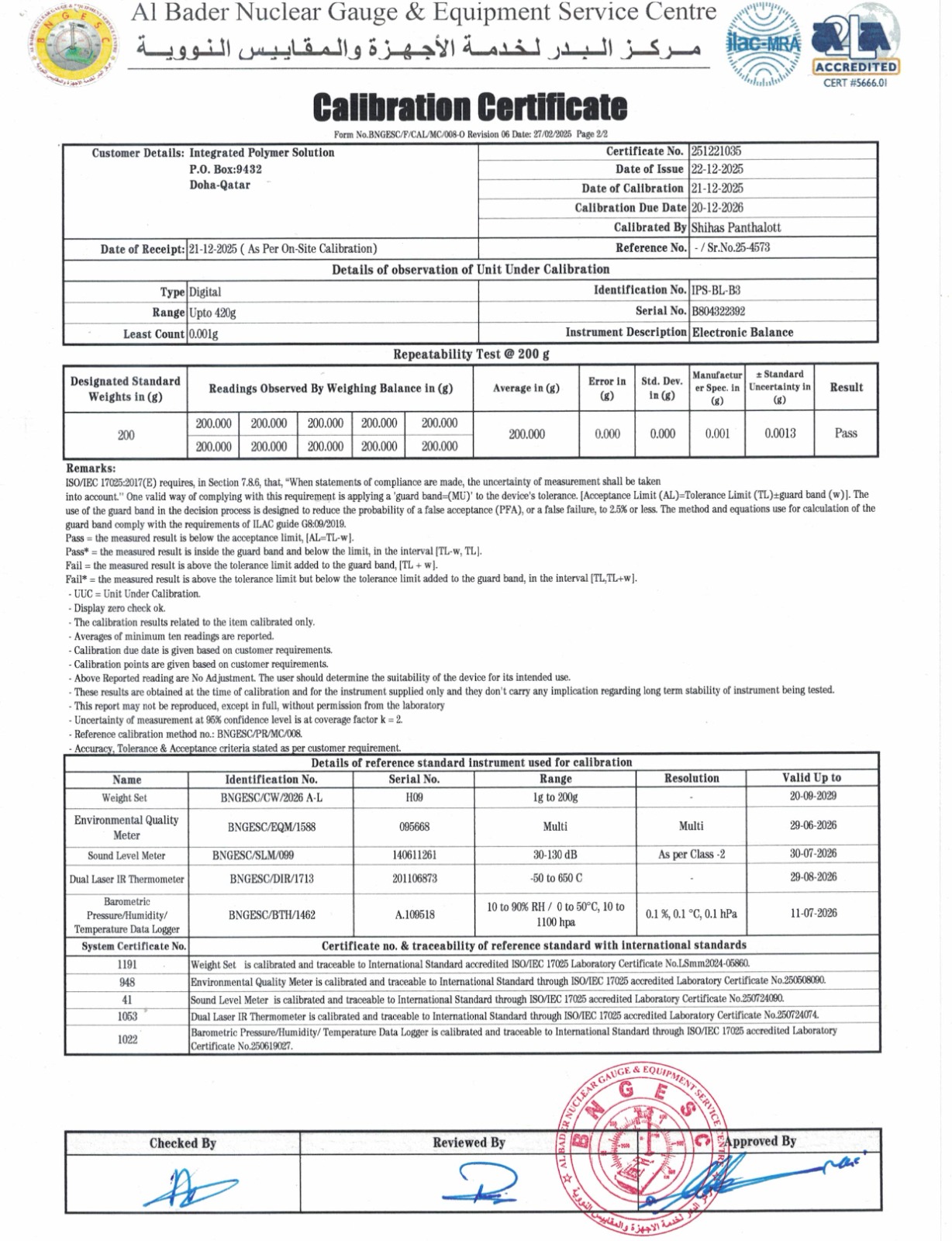 Balance OHAUS PA4202C (IPS-BL-B3) – Page 2/2
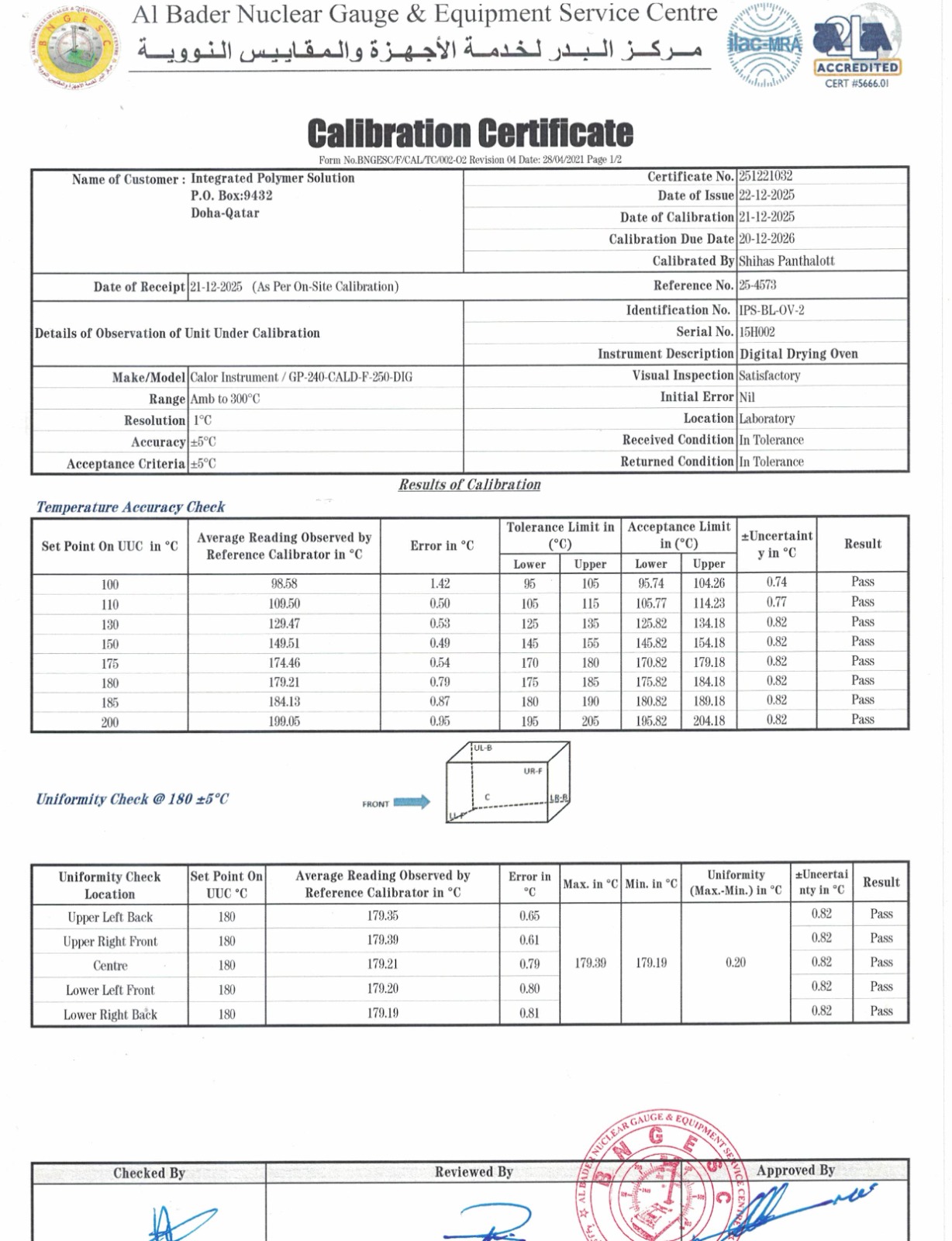 Digital Drying Oven (IPS-BL-OV-2) – Page 1/2
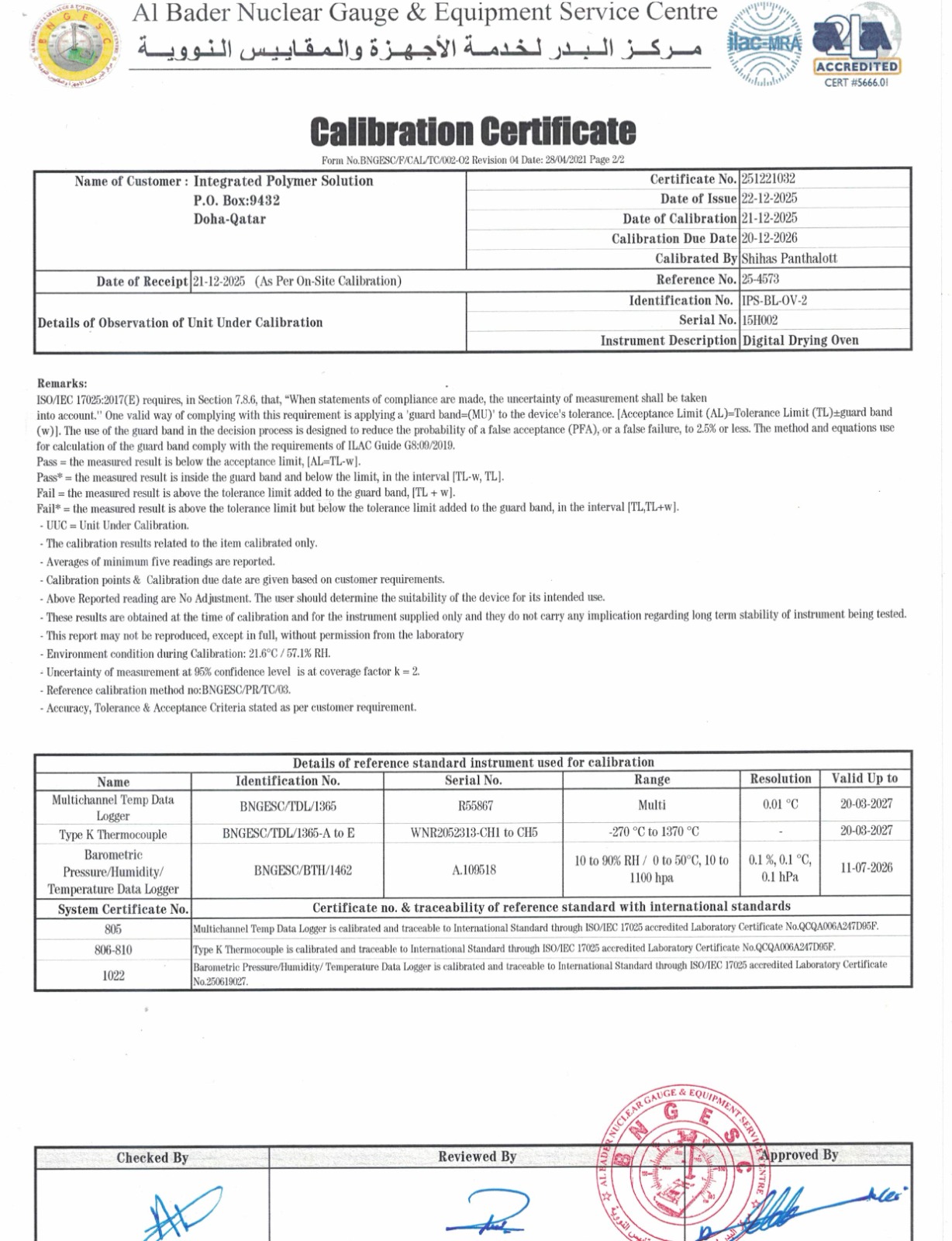 Digital Drying Oven (IPS-BL-OV-2) – Page 2/2
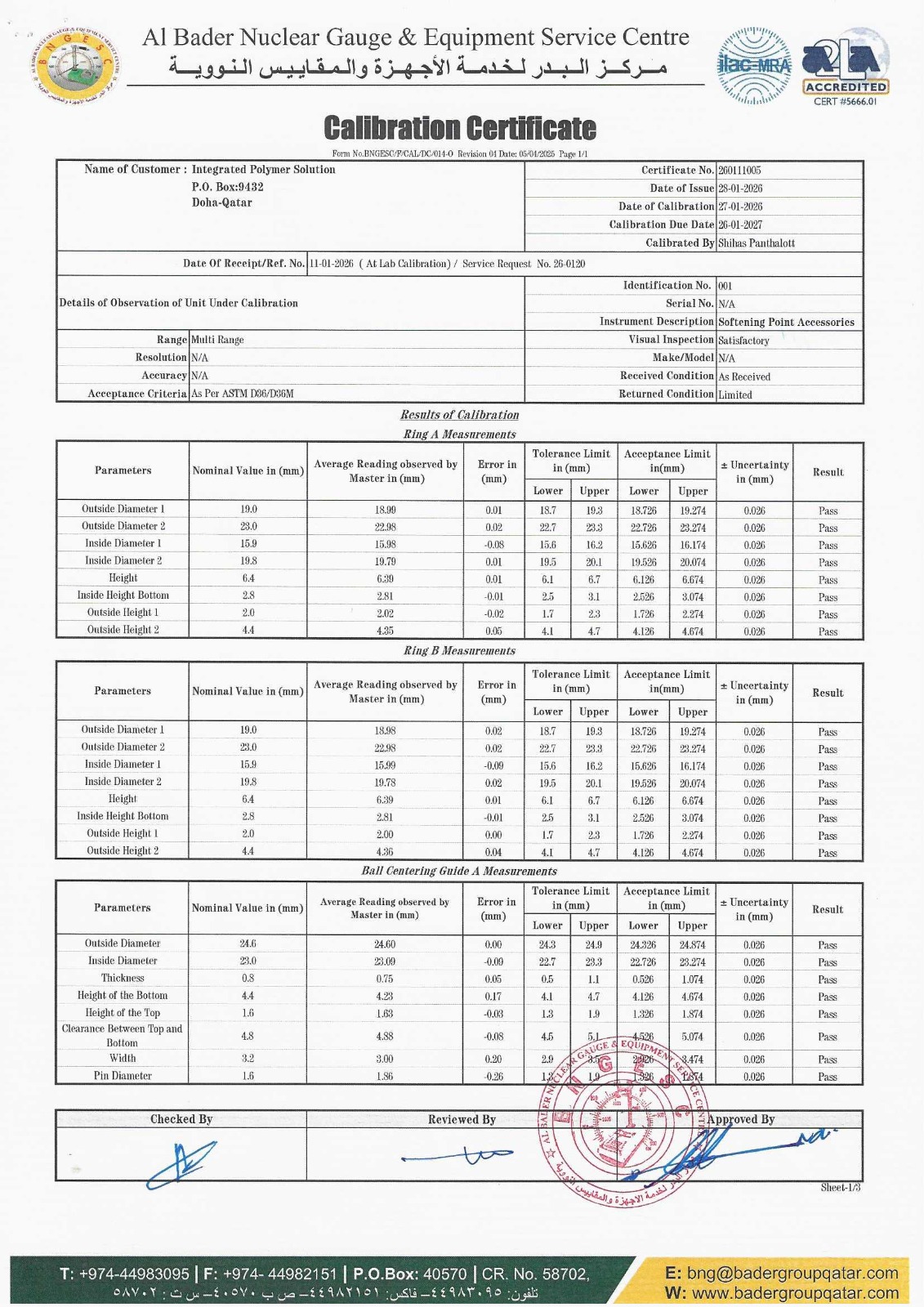 Softening Point Accessories (ASTM D36) – Sheet 1/3
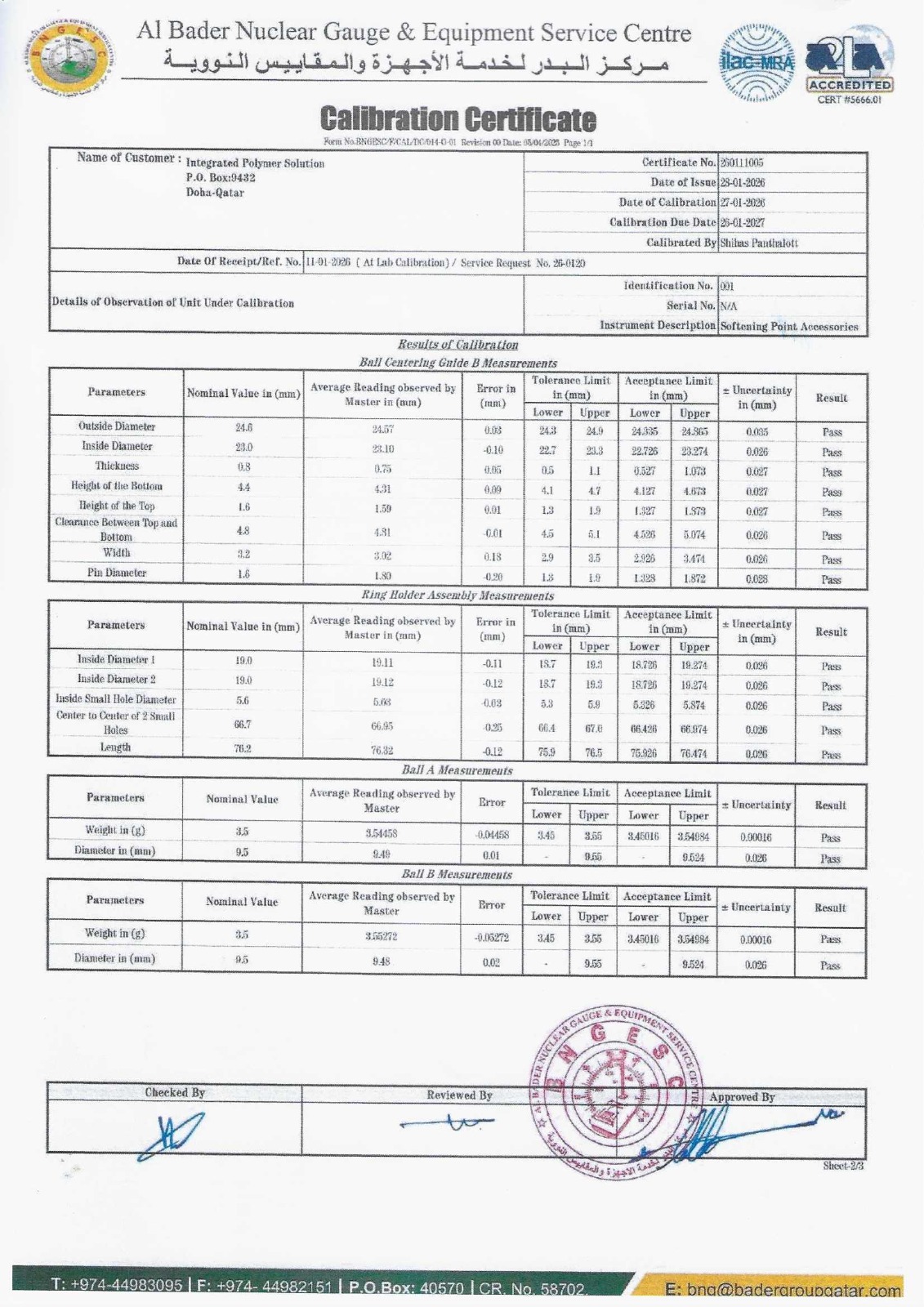 Softening Point Accessories (ASTM D36) – Sheet 2/3
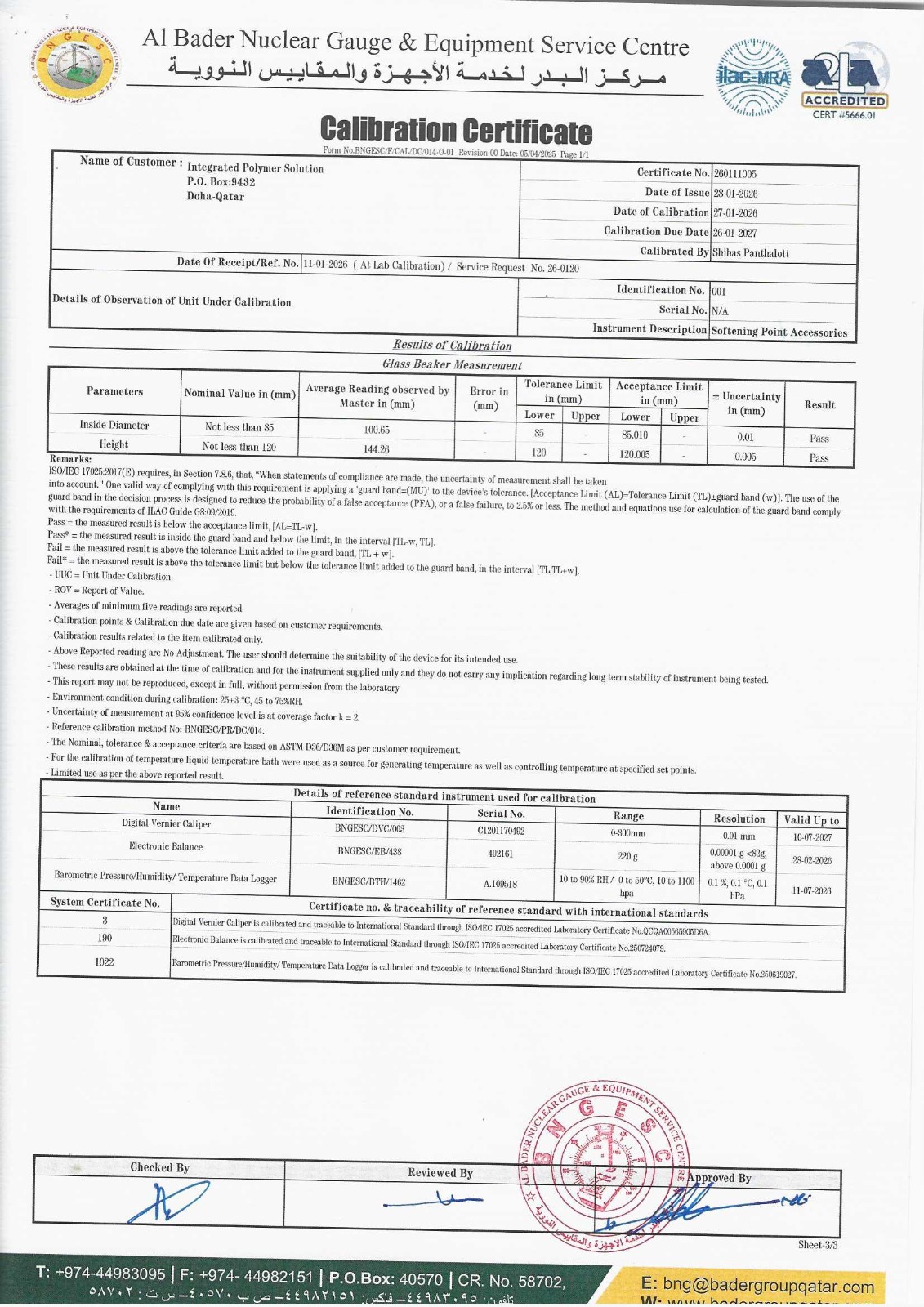 Softening Point Accessories (ASTM D36) – Sheet 3/3
Request a quotation or technical data sheet from our Doha team.